Mobile App Development (Android & iOS Apps): A Complete Guide for Businesses
In our fast-paced digital world, mobile apps have emerged as a vital resource for businesses looking to engage with customers, optimise their operations, and increase their revenue. Whether you’re launching a startup or running an established company, investing in mobile app development for both Android and iOS can really set you apart in the competitive landscape.
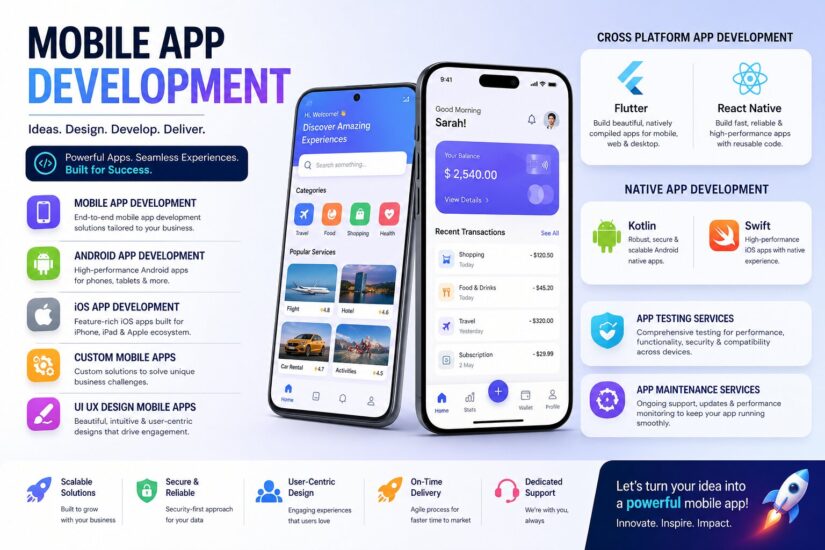
Mobile app development encompasses a variety of services, from custom app solutions to ongoing support, all aimed at ensuring your app is user-friendly, scalable, and performs at its best. In this blog, we’ll dive into the essential services involved in mobile app development and how they can truly benefit your business.
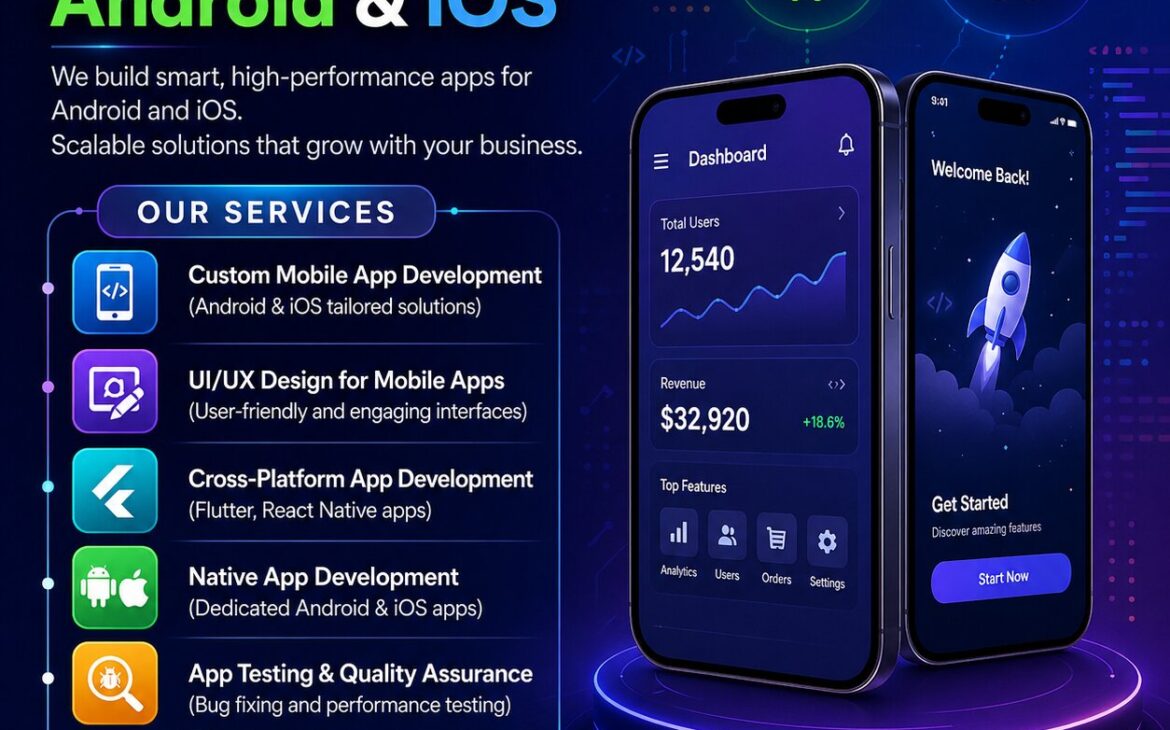
Custom Mobile App Development (Tailored Solutions for Android & iOS)
Custom mobile app development is all about crafting applications that are specifically tailored to meet your business’s unique needs. Unlike off-the-shelf apps, custom solutions provide personalised features, enhanced performance, and a smooth user experience.
Businesses can opt for Android, iOS, or both platforms based on their target audience. Custom development guarantees that your app reflects your brand identity and aligns with your business objectives. Plus, it allows for seamless integration with existing systems like CRM, ERP, and payment gateways.
With these tailored solutions, companies can offer distinctive functionalities that not only differentiate them from competitors but also boost customer engagement.
UI/UX Design for Mobile Apps (User-Friendly and Engaging Interfaces)
The success of a mobile app hinges significantly on its design. A thoughtfully crafted app not only catches the eye but also offers a seamless and intuitive user experience.
UI (User Interface) is all about the layout, colours, typography, and visual elements, while UX (User Experience) ensures that users can navigate the app effortlessly, without any confusion.
Great UI/UX design boosts user retention, enhances engagement, and lowers bounce rates. Features like straightforward navigation, quick loading times, and interactive elements all play a part in creating a positive user experience.
Putting money into professional UI/UX design guarantees that your app is not just visually appealing but also functional, making it easier for users to reach their goals.
Cross-Platform App Development (Flutter, React Native Apps)
Cross-platform app development enables businesses to create a single application that runs smoothly on both Android and iOS platforms. With technologies like Flutter and React Native, developing apps has become quicker and more budget-friendly.
Rather than building separate apps for each platform, cross-platform development utilises a single codebase, which cuts down on development time and costs. It also ensures that performance and design remain consistent across devices.
This method is perfect for businesses eager to launch their app swiftly without sacrificing quality. It’s especially advantageous for startups and small businesses that are working with tighter budgets.
Native App Development (Dedicated Android & iOS Apps)
Native app development is all about crafting applications tailored for a specific platform, whether that’s Android or iOS. These apps are developed using unique programming languages like Kotlin or Java for Android and Swift for iOS.
One of the biggest advantages of native apps is their top-notch performance, enhanced security, and the ability to tap into device-specific features like the camera, GPS, and various sensors. They offer a user experience that’s finely tuned and are particularly well-suited for high-performance applications, such as games or real-time services.
While diving into native development might take more time and resources, the payoff is worth it. You get unmatched speed and reliability, which is why many large-scale applications opt for this route.
App Testing & Quality Assurance (Bug Fixing and Performance Testing)
Before an app goes live, it’s crucial to make sure it’s bug-free and runs smoothly on various devices and operating systems. That’s where app testing and quality assurance (QA) come into play.
Testing involves a thorough check of the app’s functionality, usability, performance, security, and compatibility. QA teams employ a mix of manual and automated testing methods to spot and resolve any issues.
A well-tested app not only minimises the chances of crashes but also boosts user satisfaction and strengthens brand reputation. Plus, it ensures that the app aligns with industry standards and provides a seamless experience for users.
App Maintenance & Support (Updates, Security, and Performance Improvements)
When it comes to mobile app development, the journey doesn’t just stop at launch day. Keeping your app in tip-top shape with regular maintenance and support is key to ensuring it runs smoothly and stays current.
This means tackling bugs, rolling out feature updates, boosting performance, and making sure everything works seamlessly with the latest operating system updates. Plus, security updates are a must to safeguard user data and fend off cyber threats.
Ongoing support is vital for businesses to stay in tune with shifting market trends and evolving user expectations. It also guarantees that the app continues to provide value as time goes on.
Now, let’s talk about the perks of mobile app development for businesses:
– Enhanced customer engagement and communication
– Greater brand visibility and recognition
– Deeper customer insights through analytics
– Improved business efficiency and productivity
– Increased revenue and return on investment
With the right strategy and development approach, mobile apps can truly revolutionise how businesses operate and connect with their customers.
FAQs
1. What is mobile app development?
Mobile app development refers to the process of creating software applications designed specifically for mobile devices like smartphones and tablets.
2. Which is better: Android or iOS app development?
Both platforms have their perks. Android boasts a larger user base, while iOS tends to offer better monetisation options. Ultimately, it all comes down to your target audience.
3. What is cross-platform app development?
This is a technique for building apps that can run on both Android and iOS using a single codebase.
4. How long does it take to develop a mobile app?
The time it takes to develop a mobile app varies based on the app’s complexity, features, and design. It can take anywhere from a few weeks to several months.
5. Why is app testing important?
App testing is crucial because it helps ensure the app is free of bugs, performs well, and delivers a seamless user experience.
6. Do mobile apps require maintenance?
Absolutely! Regular maintenance is essential for updating features, fixing bugs, and keeping security in check.
Conclusion
Investing in mobile app development for both Android and iOS is essential for businesses aiming to succeed in today’s digital landscape. Every aspect, from custom development and UI/UX design to thorough testing and ongoing maintenance, is crucial in crafting a mobile application that truly stands out.
By selecting the right development strategy—be it cross-platform or native—companies can create scalable, high-performance apps that not only meet user needs but also foster growth. With regular updates and dedicated support, mobile apps can provide lasting value and keep businesses ahead of their competitors.
Thank you for reading
Buy Web Hosting at an affordable price: Buy Now.
If you want to build your website at an affordable price, contact www.nextr.in
Read this: How AI is Changing Education