Android vs iOS App Development: Which Platform Should Your Business Choose?
Mobile apps have become a part of how businesses attract customers, generate sales, improve engagement and deliver digital services. Whether you are launching a startup, expanding an existing business or building a product, one of the first decisions you need to make is whether to develop an Android app, iOS app or both.
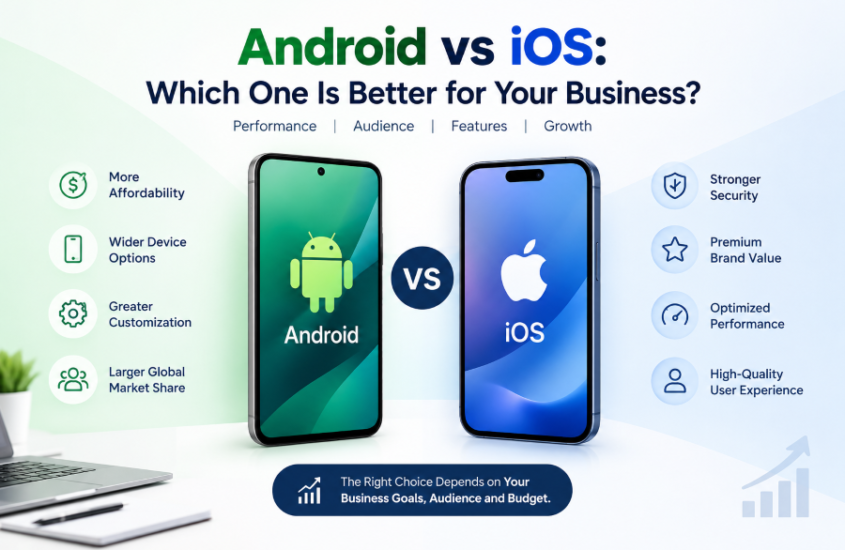
The choice between Android vs iOS app development depends on your target audience, business goals, budget, features, development timeline and long-term growth strategy. Android offers a broad device ecosystem and strong reach, while iOS provides a controlled platform and a consistent user experience.
So which platform should your business choose? Let’s compare the two.
Android vs iOS App Development: Key Differences for Businesses
Android and iOS are both mobile platforms, but their development ecosystems are different.
Android apps are primarily developed using Kotlin, with Android Studio serving as the development environment. Google officially supports Kotlin for Android development. Follows a Kotlin-first approach. Jetpack Compose is also Google’s toolkit for building Android user interfaces.
iOS apps are commonly developed using Swift and Apple’s Xcode development environment. Apple describes Swift as a safe and expressive programming language designed for Apple platforms. Developers can also use SwiftUI to create app interfaces.
For businesses, the major difference is not simply the programming language. It is the audience, device ecosystem, development process, testing requirements, distribution model and overall product strategy.
Android App Development
Android can be a choice when your business wants to reach a broad range of smartphone users. The platform supports devices from manufacturers and offers flexibility in hardware and software configurations.
Android development can be particularly useful for:
E-commerce businesses
On-demand service platforms
Startups targeting a broad audience
Educational applications
Delivery and logistics apps
Enterprise applications
Apps requiring device integration
Android’s modern development ecosystem includes Kotlin, Android Studio, and Jetpack Compose, giving development teams tools for creating scalable and adaptive applications.
iOS App Development
iOS development is ideal for businesses targeting Apple users and customers who primarily use iPhone or other Apple devices.
Apple’s ecosystem offers an integrated development and distribution environment. Developers use technologies such as Swift, SwiftUI and Xcode to build, test and distribute applications.
iOS app development can be particularly suitable for:
Premium consumer applications
Subscription-based businesses
Fintech applications
Lifestyle and productivity apps
Healthcare and professional services
Businesses targeting Apple-focused audiences
Startups launching premium digital products
Apple also continues to expand capabilities around AI, machine learning, security and other platform technologies, creating opportunities for businesses to add features to their applications.
Android vs iOS: Which One Is Better for Your Business?
There is no winner between Android and iOS. The right platform depends on your business model and customers.
Choose Android If Your Priority Is Reach
If your customers use a wide range of Android smartphones, Android development can help your business reach a diverse user base.
For example, a local service marketplace may benefit from Android because its potential customers can use smartphones across price ranges and manufacturers.
Android can also be an option when your application needs integration with a variety of devices, hardware configurations or Android-specific capabilities.
Choose iOS If Your Priority Is a Premium User Experience.
Businesses targeting Apple customers may prefer iOS because the platform provides a controlled ecosystem.
Apple’s development environment allows businesses to create applications for Apple platforms while taking advantage of technologies such as SwiftUI, SwiftData and Apple Intelligence-related capabilities.
If your business model depends heavily on subscriptions, premium digital services or customers who primarily use Apple devices, an iOS-first strategy can make sense.
Choose Both If You Want Maximum Market Coverage
For established businesses, developing both Android and iOS applications can provide the best long-term strategy.
Launching on both platforms can help you:
Reach more potential customers.
Build brand visibility
Increase app downloads
Serve customers across different devices.
Collect data from multiple user segments.
Expand your digital presence.
Reduce dependence on a single platform.
However, developing two native applications can increase development, testing, maintenance and update requirements. Businesses should therefore evaluate the expected return before committing to both platforms.
Android vs iOS Development: Cost, Performance & Long-Term Strategy
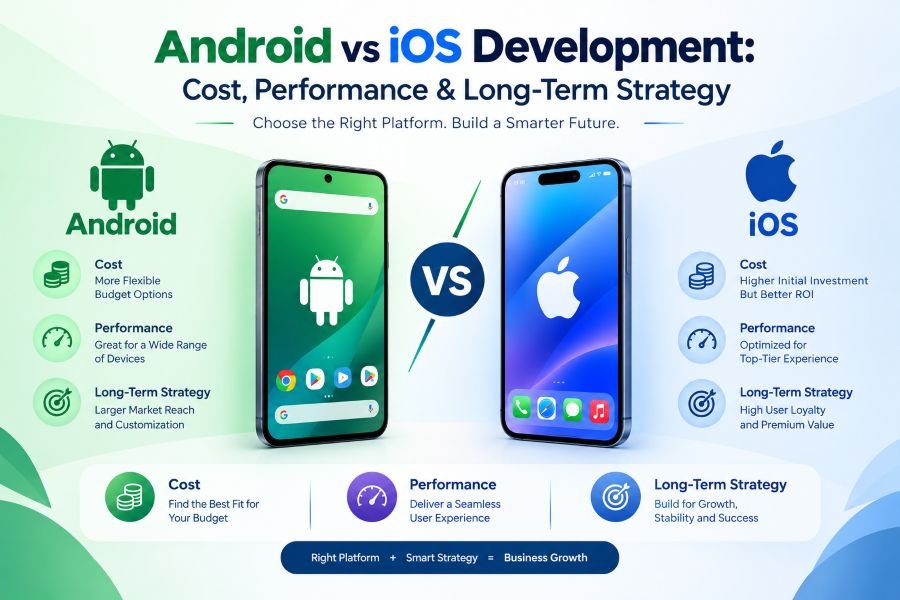
Development Cost
The cost of mobile app development depends on the applications complexity than simply whether it is Android or iOS.
A basic business application may require features such as:
User registration
Login
Product or service listings
Search
Push notifications
Payment integration
Admin dashboard
An advanced application may require AI, GPS tracking, real-time chat, video streaming, IoT integration, advanced analytics or third-party APIs.
Developing native Android and iOS apps generally requires additional resources because each platform has its own codebase, testing environment and release process.
Performance
Native development can provide platform-specific performance because the application is designed specifically for its target operating system.
Android applications can take advantage of Kotlin and modern Android technologies such as Jetpack Compose.
iOS applications can use Swift and Apple’s native frameworks to deliver experiences across Apple platforms.
For applications requiring graphics, advanced hardware access, or highly optimised performance, native development may be worth considering.
User Experience
User expectations are different across Android and iOS. A successful app should follow platform design conventions rather than simply copying the same interface everywhere.
Your development team should consider:
Navigation patterns
Screen layouts
Typography
Buttons. Controls
Accessibility
Notifications
Gestures
Platform-specific features
A strong UI/UX strategy can improve customer satisfaction and increase engagement.
Security
Security should be a priority regardless of platform. Businesses should implement authentication, encrypted communication, safe data storage, regular updates and appropriate access controls.
The development process should also include security testing before launch and throughout the application’s lifecycle.
App Store & Google Play Distribution
Android applications are distributed through Google Play while iOS applications are distributed through Apple’s App Store.
Apple’s development ecosystem uses Xcode for building, testing and preparing applications for distribution through the App Store.
Businesses should plan their app-store listing, screenshots, descriptions, keywords, reviews and updates as part of their App Store Optimisation (ASO) strategy.
How Should You Decide Between Android and iOS?
Before selecting a platform, answer these questions:
Who’s your target audience?
Which smartphones do your customers primarily use?
What is your development budget?
How quickly do you need to launch?
What features will the application require?
Do you need hardware integration?
Is your business targeting a national or global audience?
Will the application generate revenue through subscriptions, purchases or advertising?
Do you need Android and iOS from the beginning?
What are your long-term maintenance requirements?
The answers can help you determine whether an Android-first, iOS-first, or dual-platform strategy makes the most sense.
Why Work With a Professional Mobile App Development Company?
Building an application involves much more than writing code. A professional mobile app development company can help with market research, UI/UX design, technology selection, development, API integration, testing, deployment and maintenance.
At Nextr, businesses can plan an application around their specific goals instead of choosing a platform based only on popularity. The right technology stack should support scalability, performance, security and future expansion.
A professional development team can also help businesses decide between cross-platform development depending on budget, timeline and application requirements.
Conclusion
The decision between Android vs iOS app development should be based on your customers, business objectives and product requirements.
Choose Android when broad device reach and flexibility are priorities. Choose iOS when your target audience is strongly concentrated within Apple’s ecosystem, and you want a premium controlled platform experience. If your business needs market coverage, developing for both Android and iOS may provide the strongest long-term opportunity.
The important step is to define your audience, features, budget and growth objectives before development begins. With the strategy and professional development support, your mobile app can become a valuable channel for customer engagement, revenue generation and business growth.
Frequently Asked Questions
1. Which is better: Android or iOS app development?
Neither platform is universally better. Android is often suitable for businesses prioritising reach, while iOS can be ideal for businesses targeting Apple users and premium digital experiences.
2. Is Android app development cheaper than iOS?
The cost depends primarily on app complexity, features, integrations, design and development requirements. A simple application can cost less than an application regardless of platform.
3. Should a startup develop an Android or iOS app first?
Startups should analyse their target customers before choosing. If most potential users are on Android, an Android-first launch may make sense. If the target market is heavily iOS-oriented, starting with iOS may be more appropriate.
4. Can one app work on both Android and iOS?
Yes. Businesses can use cross-platform technologies to create applications for both operating systems from a shared codebase. However, the best approach depends on performance, features, budget and project requirements.
5. Can Nextr develop both Android and iOS applications?
Yes. A professional mobile app development team can help businesses plan, design, develop, test and maintain applications for Android and iOS according to their business requirements.
Thank you for reading
Buy Web Hosting at an affordable price: Buy Now.
If you want to build your website at an affordable price, contact www.nextr.in
Read this: How AI is Changing Education