Blockchain Technology Beyond Cryptocurrency: Real-World Applications & Future Scope
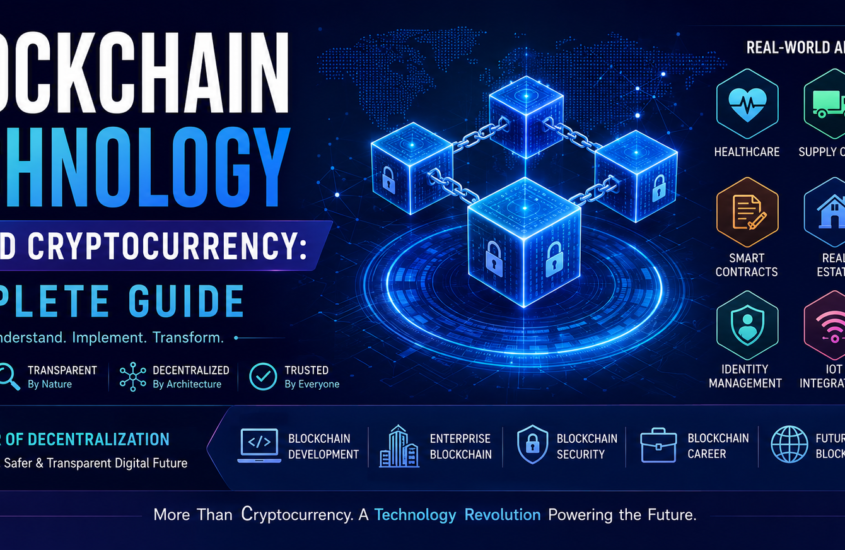
Blockchain technology is not about Bitcoin and Ethereum anymore. It has become so much more. Today, it is changing the way industries work by providing transparent and decentralised solutions for managing data, transactions and digital trust. Many businesses, governments, healthcare providers and financial institutions are using blockchain to make their work more efficient, reduce fraud and make things easier.
In this blog, we will talk about blockchain technology beyond cryptocurrency. We will explore how it works, its real-world applications, benefits, challenges and future opportunities.
What is Blockchain Technology?
Blockchain is like a book that keeps track of all the transactions that happen on a network of computers. This book is special because it is not controlled by one person or organisation. Instead, it is shared among people, which makes it transparent and hard to cheat.
Each transaction is stored in a “block”, and every new block is connected to the one before, making a “chain” of records. This is what makes blockchain so secure.
The main features of blockchain are:
Decentralization
Transparency
Security
Immutability
Traceability
Consensus-based validation
These features make blockchain very useful for things beyond digital currencies.
How Does Blockchain Work?
Blockchain works in a structured way to record and validate information.
1. Transaction Initiation
Someone starts a transaction. Adds data to the blockchain network.
2. Verification
The people on the network, called nodes, check the transaction to make sure it is valid.
3. Block Creation
Once the transaction is verified, it is grouped with valid transactions into a new block.
4. Block Addition
The new block is connected to the block, making the record permanent.
5. Distribution
The updated blockchain is shared with all the nodes on the network so everyone has a copy.
Blockchain Beyond Cryptocurrency
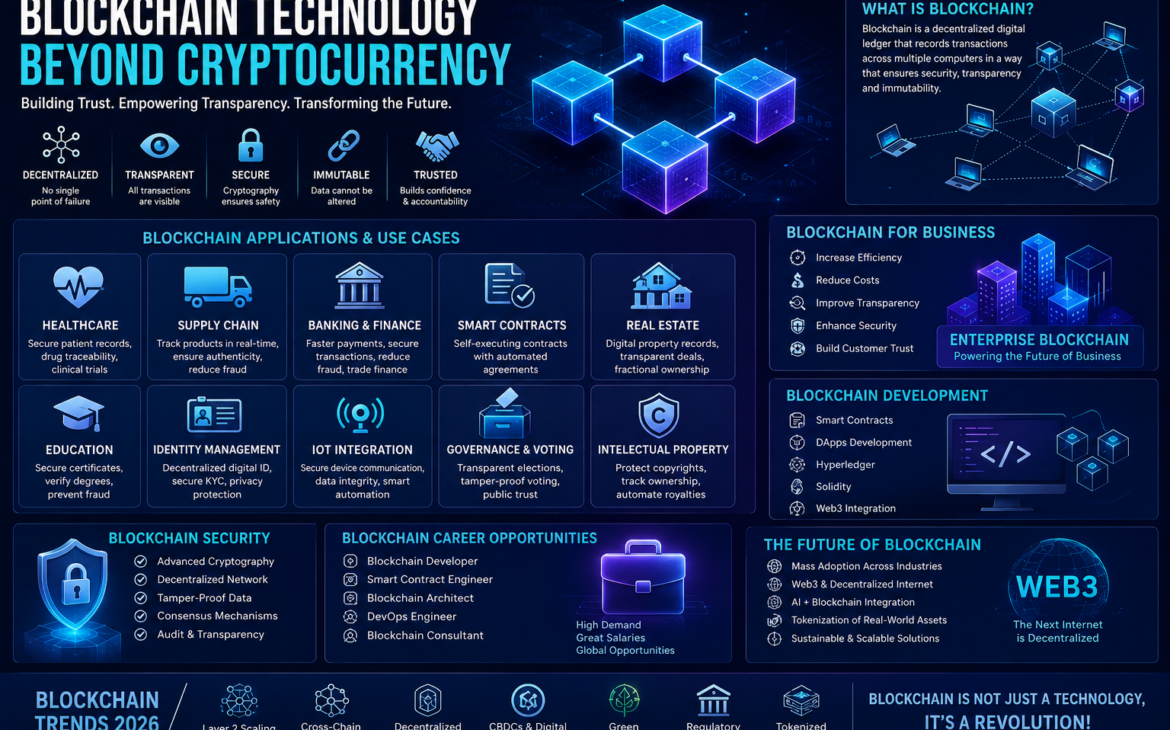
Although blockchain became famous because of cryptocurrencies, it can be used in other industries.
1. Supply Chain Management
Blockchain helps track products from the manufacturer to the consumer. This makes it easier to verify the authenticity of products, track them in time and reduce counterfeiting.
Many industries, such as food, pharmaceuticals and luxury goods, can benefit from using blockchain in their supply chains.
2. Healthcare
Healthcare organisations use blockchain to manage patient records and keep them private.
Some examples of how blockchain’s used in healthcare include:
Electronic medical records
Secure data sharing
Drug tracking
Clinical trial management
Health insurance processing
Blockchain helps reduce medical errors and makes patients trust the system more.
3. Banking and Financial Services
Banks use blockchain to make financial operations simpler.
Some key applications of blockchain in banking include:
Border payments
Fraud prevention
Identity verification
Loan processing
Trade finance
Smart contracts
Blockchain reduces transaction costs and makes things faster and more secure.
4. Digital Identity Management
Identity theft is a problem worldwide. Blockchain helps individuals control their identities without relying on centralised databases.
The benefits of using blockchain for identity management include:
Secure authentication
Reduced identity fraud
Simplified KYC verification
Privacy protection
5. Smart Contracts
Smart contracts are agreements that automatically execute when certain conditions are met. They reduce paperwork. Eliminate the need for intermediaries.
Some common uses of contracts include:
Real estate agreements
Insurance claims
Employment contracts
Vendor payments
Legal documentation
6. Voting Systems
Blockchain-based voting systems make elections more transparent.
The advantages of using blockchain in voting systems include:
Tamper- voting records
Reduced election fraud
Faster vote counting
Improved voter confidence
Many governments are exploring the use of blockchain for secure elections.
7. Real Estate
Blockchain makes property transactions simpler by digitising ownership records.
Some applications of blockchain in estate include:
Land registry
Property verification
Digital contracts
Mortgage processing
Fractional property ownership
This reduces paperwork and speeds up transactions.
8. Education
Educational institutions use blockchain to verify credentials.
Some examples of how blockchain’s used in education include:
Digital certificates
Degree verification
Transcript management
Skill certification
Employers can quickly verify qualifications without manual checks.
9. Intellectual Property Protection
Artists, writers, musicians and software developers can register their work using blockchain.
The benefits of using blockchain for intellectual property protection include:
Copyright protection
Ownership verification
Royalty distribution
Digital licensing
This helps creators protect their work.
10. Internet of Things (IoT)
Blockchain enhances security by enabling secure communication between connected devices.
Some applications of blockchain in IoT include:
homes
Industrial automation
Smart cities
Connected vehicles
Energy management
Blockchain minimises the risk of device access.
Benefits of Blockchain Technology
Organisations adopt blockchain because of its advantages.
Security: Blockchain is highly resistant to hacking and data tampering.
Transparency: All authorised participants can view transactions, increasing accountability.
Improved Efficiency: Automation through contracts reduces manual work and processing time.
Cost Reduction: Removing intermediaries lowers expenses.
Better Traceability: Every transaction is permanently recorded, making audits and tracking easier.
High Reliability: Decentralised networks eliminate points of failure.
Challenges of Blockchain Technology
Despite its advantages, blockchain adoption faces challenges.
Scalability: Large blockchain networks may experience slower transaction speeds during high demand.
High Energy Consumption: Some consensus mechanisms, such as Proof of Work, require computational power.
Regulatory Uncertainty: Many countries are still developing blockchain regulations.
Integration Complexity: Implementing blockchain into existing systems can be costly and technically challenging.
Limited Awareness: Many businesses still lack knowledge about blockchain applications beyond cryptocurrency.
Industries Using Blockchain
Blockchain adoption is growing across sectors, including:
* Banking and Finance
* Healthcare
* Retail
* Manufacturing
* Agriculture
* Logistics
* Insurance
* Government Services
* Education
* Energy
* Telecommunications
* Entertainment
* Estate
* Automotive
* E-commerce
These industries use blockchain to improve operational efficiency and build trust.
Future of Blockchain Technology
The future of blockchain extends beyond digital currencies.
Some emerging trends include:
* Decentralised Finance (DeFi)
* Central Bank Digital Currencies (CBDCs)
* Blockchain-as-a-Service (BaaS)
* Web3 Applications
* Tokenised Assets
* Decentralised Identity Systems
* AI and Blockchain Integration
* Green Blockchain Solutions
* Cross-Chain Interoperability
* Enterprise Blockchain Platforms
As businesses continue their transformation, blockchain will become a foundational technology supporting secure and transparent digital ecosystems.
Skills Required for a Blockchain Career
Professionals in blockchain development should build expertise in:
* Blockchain fundamentals
* Cryptography
* Smart contract development
* Programming languages (such as Solidity, JavaScript, Python, Go)
* Distributed systems
* Cloud computing
* Cybersecurity
* Data structures and algorithms
* DevOps
* Problem-solving and analytical thinking
Demand for blockchain developers, architects, consultants and security specialists continues to grow.
Conclusion
Blockchain technology has come a long way since its association with cryptocurrencies. It provides transparent and decentralised systems that are revolutionising industries such as healthcare, finance, supply chain, education, real estate and government services. As organisations adopt transformation, blockchain is becoming a key enabler of trust, automation and efficiency. Although challenges remain, innovation continues to address these issues. For businesses and professionals, understanding blockchain technology is essential to prepare for the future of the economy.
Frequently Asked Questions (FAQs)
1. What is blockchain technology?
Blockchain technology is a decentralised ledger that securely records transactions across multiple computers, making data transparent, immutable and resistant to tampering.
2. Is blockchain only used for cryptocurrency?
No blockchain technology is widely used in supply chain management, healthcare, banking, education, real estate, identity verification, IoT and many other industries beyond cryptocurrency.
3. What are contracts?
Smart contracts are self-executing agreements that automatically enforce contract terms when predefined conditions are met, reducing the need for intermediaries.
4. What are the main benefits of blockchain?
The main benefits of blockchain technology include enhanced security, transparency, decentralisation, traceability, faster transactions, reduced costs and improved operational efficiency.
5. What is the future scope of blockchain technology?
The future scope of blockchain technology includes finance (DeFi), Web3, AI integration, tokenised assets, digital identity solutions, enterprise applications and secure government services.
Thank you for reading
Buy Web Hosting at an affordable price: Buy Now.
If you want to build your website at an affordable price, contact www.nextr.in
Read this: How AI is Changing Education