AI is changing how we make, edit, publish and share content. From AI-made images and videos to auto-written articles, voice recordings, and digital designs, today’s AI tools have made creating content easier to reach. The fast rise of generative AI has also brought big problems with false information, deepfakes, copyright issues and digital authenticity. It is getting harder for businesses and people online to tell if digital content is original, AI-generated or altered. This is where Digital Provenance Technology is becoming an idea. It helps establish the origin, ownership details, and change history of assets. That lets users see how content was made and whether its related records have been changed. By mixing signatures, metadata, digital watermarking and content verification systems, digital provenance technology is opening new ways to build openness and trust across the digital world.
What Is Digital Provenance Technology and How Does It Work?
Digital Provenance Technology means a set of methods used to track and check the origin, history and changes of content. It makes a record of how an image, video, audio recording or document was made, edited and shared. Style digital files may hold little information about their makers or edit history. Provenance-enabled content can carry details that help users grasp its background. This tech matters a lot as AI-generated content gets more realistic and harder to tell from human-made material.
One key step in this area is the Coalition for Content Provenance and Authenticity (C2PA), which has put out a technical standard for Content Credentials. These credentials can hold details about the tools used to make or change assets, plus cryptographically signed records that help spot unauthorised changes to related provenance details. The system uses signatures and cryptographic methods to make the recorded history tamper-evident. That means users can check if the related credentials have been changed after signing.
Digital provenance technology works through linked parts. Metadata stores details about content creation, editing activities and processing tools. Cryptographic hashing creates a fingerprint that helps spot changes to a file. Digital signatures give a way to check if provenance records were signed by a trusted certificate holder. Digital watermarking can also put hidden identifiers into content, helping verification systems spot certain assets even when some metadata is missing. Together, these technologies give a base for digital content authentication.
For example, when a designer makes an image with an AI-powered design app, the software may attach Content Credentials showing how the image was made and which tools were used. If the image is later edited with another supported app, more details can be recorded in its provenance history. When someone gets the image, a compatible verification tool can look at its credentials and give details about its creation and editing process. This gives publishers, businesses and consumers context before they trust or share digital media.
Benefits of Digital Provenance Technology for AI-Generated Content
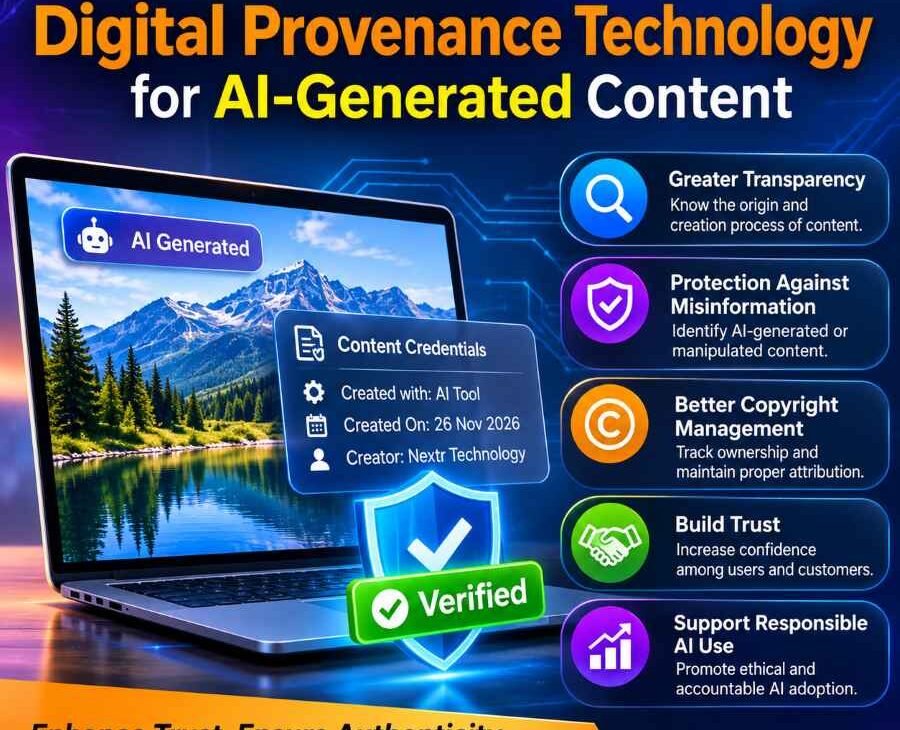
The growing use of AI across industries makes digital provenance technology more and more valuable. One of its pluses is greater transparency. Businesses can give details about whether their marketing visuals, videos, ads and other digital assets were made or changed with artificial intelligence. This openness can help customers better grasp the content they are viewing and make choices.
Another big. Is protection against digital false information. AI-made deepfakes and manipulated media can cause confusion, hurt reputations and spread misleading information. Digital provenance systems help give details about the origin and change history of supported content. Provenance tech cannot decide if information is factually right, but it gives users more evidence to support their judgment of digital authenticity.
Digital Provenance Technology can also back copyright management and content ownership workflows. Photographers, graphic designers, video creators and digital publishers often hit problems when their work is copied, edited or shared without credit. Provenance records can help keep details about the creation and editing history of assets. Businesses can use these records to improve content management, document creative workflows and support intellectual property protection processes.
For marketing agencies, e-commerce companies and online publishers, this tech can become a key part of responsible content creation. Marketing teams often use AI-powered tools to build promo images, product descriptions, videos and social media campaigns. Keeping details about how these assets were made can improve internal accountability and support open communication with audiences. As digital marketing leans on automation and artificial intelligence, content verification will become a more valuable part of digital business operations.
Digital provenance can also boost trust in journalism, education, entertainment and financial services. News groups can use provenance details to give context about photos and videos. Learning platforms can share how AI-made learning materials were produced. Businesses can set up content verification workflows to protect their digital communications. These uses show how provenance tech can help build an open and accountable online world.
Future of Digital Provenance Technology: AI Authentication, Content Credentials and Business Applications
The future of Digital Provenance Technology will be closely tied to changes in intelligence, cybersecurity, blockchain-inspired verification systems and digital identity management. As AI-made images, videos, audio and documents become common, organisations will need reliable ways to know where digital information comes from and how it has been changed. Content Credentials, verification and hidden watermarking are expected to play big roles in building these systems.
The use of standards like C2PA can help make a steady approach to recording and checking digital content history. Tech companies, content creators, publishers and software developers can add provenance features into their apps and platforms. This could make content verification a natural part of everyday digital workflows instead of making users rely fully on separate authentication services.
AI-powered content verification tools are another step. These tools can help organisations inspect assets, find available provenance records and organise content authenticity details. Linking with content management systems, cloud platforms and digital marketing software could make it easier for businesses to manage verified assets through their production and publishing steps.
For companies putting money into transformation, website development, software development and AI integration, provenance tech offers new ways to build more open digital solutions. Businesses can look into verification features for media platforms, automated publishing systems and enterprise apps. At the time, developers must think about privacy, compatibility, security and the limits of available verification methods.
It is also key to know that digital provenance does not promise that content is truthful or fully free from manipulation. Credentials may be missing, removed or unsupported by some apps. A verified creation history does not prove the accuracy of every statement in a file. So organisations should pair provenance systems with human review, information sources and good cybersecurity practices. A balanced approach will help businesses gain from AI innovation while maintaining digital communication.
As the digital world keeps changing, Digital Provenance Technology will become a base for content openness, authentication and responsible AI adoption. Companies that grasp and adopt these technologies can strengthen their digital workflows, improve accountability and get ready for a future where checking the origin of online content becomes more and more important.
Conclusion
Digital Provenance Technology is rising as an answer for building trust in an AI-driven digital world. By mixing Content Credentials, cryptographic signatures, metadata and digital watermarking, it helps users grasp the origin and change history of content. From marketing and online publishing to cybersecurity and enterprise software, its uses can support more openness and accountability. Provenance tech cannot guarantee the truthfulness of digital information, but it gives useful verification signals for making smart choices. As AI-generated content keeps growing, businesses should look into provenance solutions to create safer, more open and trustworthy digital experiences. Nextr Technology sees the value of technologies in digital transformation and modern business innovation.
Frequently Asked Questions (FAQs)
1. What is Digital Provenance Technology?
Digital Provenance Technology is a way of tracking and checking the origin, creation process and change history of content. It uses technologies like metadata, cryptographic signatures, digital fingerprints and watermarking to provide details about digital assets.
2. How does Digital Provenance Technology identify AI-generated content?
Digital provenance systems can use Content Credentials, metadata and digital watermarks to show whether supported content was made or changed with AI tools. Verification apps can look at these signals. Give details about the content’s creation history.
3. What are C2PA Content Credentials?
C2PA Content Credentials are checkable records that give details about the origin and editing history of digital content. They use signatures to help check the integrity of related provenance details.
4. Can Digital Provenance Technology prevent deepfakes and misinformation?
Digital provenance technology cannot fully stop deepfakes or false information. It can provide more verification details about the origin and change history of digital content, helping users make smarter choices.
5. Why is Digital Provenance Technology important for businesses?
It helps businesses improve content openness, keep asset records, support copyright management and build customer confidence. It can also strengthen content verification workflows across marketing, publishing, e-commerce and software apps.
Thank you for reading
Buy Web Hosting at an affordable price: Buy Now.
If you want to build your website at an affordable price, contact www.nextr.in
Read this: How AI is Changing Education