E-commerce SEO Best Practices: 15 Powerful E-commerce SEO Strategies to Grow Your Online Business

The e-commerce industry is growing fast. This means there is a lot of competition. Every day, thousands of online stores try to get customers to notice them. While paid ads can bring in traffic quickly, they can get very expensive over time. This is where Search Engine Optimisation, or e-commerce SEO, comes in. It helps your website show up higher in search results on sites like Google.
E-commerce SEO is about making your online store easy for customers to find when they search for products. When your website is well optimised, it attracts people who are actually looking for what you sell. This means you get visitors who are likely to buy something, which leads to more sales.
Whether you have an online store or a big e-commerce business, using good SEO strategies can really help you get noticed and sell more. This guide will show you some tips to increase your online sales and build a strong digital business.
Why E-commerce SEO Matters
Unlike paid ads, which stop working once you stop paying, e-commerce SEO keeps bringing in visitors for months or even years.
The benefits of e-commerce SEO include:
* organic traffic
* Better search engine rankings
* More people knowing about your brand
* Lower costs to get customers
* More people buying from you
* A better experience for users
* returns on investment in the long run
Most people start their shopping journey by searching on a search engine. If your products do not show up in the search results, you are losing customers to your competitors.
1. Do Keyword Research
Keyword research is the base of any SEO plan.
Instead of using general keywords like:
Shoes
Mobile
Laptop
Try using longer keywords like:
Best running shoes for men
Affordable gaming laptop under ₹70,000
Wireless earbuds with noise cancellation
These longer keywords usually have:
Less competition
More people buying
People looking to buy something.
Use these keywords naturally in:
Product titles
Product descriptions
Category pages
Blog articles
Meta titles
Meta descriptions
2. Optimise Product Pages
Each product page should be optimised on its own.
Include:
SEO- product titles
Instead of “Blue Shirt”, use “Men’s Slim Fit Blue Cotton Casual Shirt”.
Write product descriptions. Do not copy what the manufacturer says.
Include:
What the product is good for
Features
Specifications
How to use it
asked questions
Unique descriptions help Google understand your products better.
3. Use Good Quality Images
Images help people decide what to buy.
Make them better by:
Making the file size smaller
Using file names
Adding ALT text
Using WebP format
Loading them only when needed
Example:
Filename:
ALT text: “Men’s black running shoes with breathable mesh”
4. Make Your Website Faster
A slow website means people leave quickly.
Make it faster by:
Making images smaller
Using browser caching
Choosing a host
Minimising CSS and JavaScript
Using a Content Delivery Network (CDN)
Google thinks page speed is important for rankings.
5. Make Your Website Work Well on Mobile
More than half of shoppers use their smartphones.
Make sure your website:
Uses a design that works on all devices
Loads quickly
Has fonts that’re easy to read
Has big buttons that are easy to tap
Is easy to navigate
Google mostly looks at the mobile version of websites.
6. Optimise Category Pages
Category pages can rank better than product pages because they use keywords.
Example categories:
Mens Clothing
Women’s Shoes
Gaming Accessories
Kitchen Appliances
Optimise category pages with:
SEO- URLs
Headings with keywords
Short descriptions
Internal links
Filters that do not create duplicate content
7. Create SEO- URLs
Good URL: example.com/mens-running-shoes
Bad URL: example.com/product?id=48739
Keep URLs:
Short
Descriptive
Easy to read
8. Write Good Meta Titles and Descriptions
Meta titles improve click-through rates.
Example:
Meta Buy Wireless Bluetooth Earbuds | Free Delivery
Meta Description: Shop premium Bluetooth earbuds with bass, fast charging and free shipping across India.
Use your keywords naturally.
9. Add Customer Reviews
Reviews give you content and build trust.
Benefits include:
rankings
Rich snippets
More sales
Improved credibility
Ask buyers to leave honest reviews.
10. Build Internal Links
Internal links help users and search engines find pages.
Link to:
Product pages
Blog articles
Categories
products
Best-selling collections
Example: If someone is looking at laptops, they can also see laptop accessories.
11. Create Valuable Blog Content
Content marketing supports SEO by targeting keywords that provide information.
Write blogs like:
Buying guides
Product comparisons
Industry trends
Maintenance tips
asked questions
Example: “How to Choose the Best Office Chair”
Readers might buy products from your store later.
12. Optimise Technical SEO
Technical SEO ensures search engines can crawl your website efficiently.
Focus on:
XML sitemap
Robots.txt
HTTPS security
Canonical tags
Fixing broken links
Crawl error resolution
Technical optimisation makes your SEO better overall.
13. Use Structured Data
Structured data helps search engines show results.
Add schema for:
Products
Reviews
Ratings
Price
Availability
FAQs
Rich snippets get clicks from search results.
14. Reduce Cart Abandonment
SEO brings traffic. User experience increases sales.
Improve checkout by:
Offering guest checkout
Displaying trust badges
Providing payment methods
Showing shipping details upfront
Simplifying checkout forms
A smooth buying process converts more visitors into customers.
15. Monitor SEO Performance
Track important SEO metrics using tools like:
Google Analytics
Google Search Console
Ahrefs
SEMrush
Monitor:
Organic traffic
Keyword rankings
Sales
Bounce rate
Page speed
performing products
Regular analysis helps refine your SEO strategy over time.
Common E-commerce SEO Mistakes
Avoid these mistakes:
Duplicate product descriptions
Missing ALT tags
Slow website speed
links
Poor mobile experience
Thin content
Using too many keywords
Ignoring technical SEO
Missing structured data
Weak internal linking
Fixing these issues can improve both rankings and user experience.
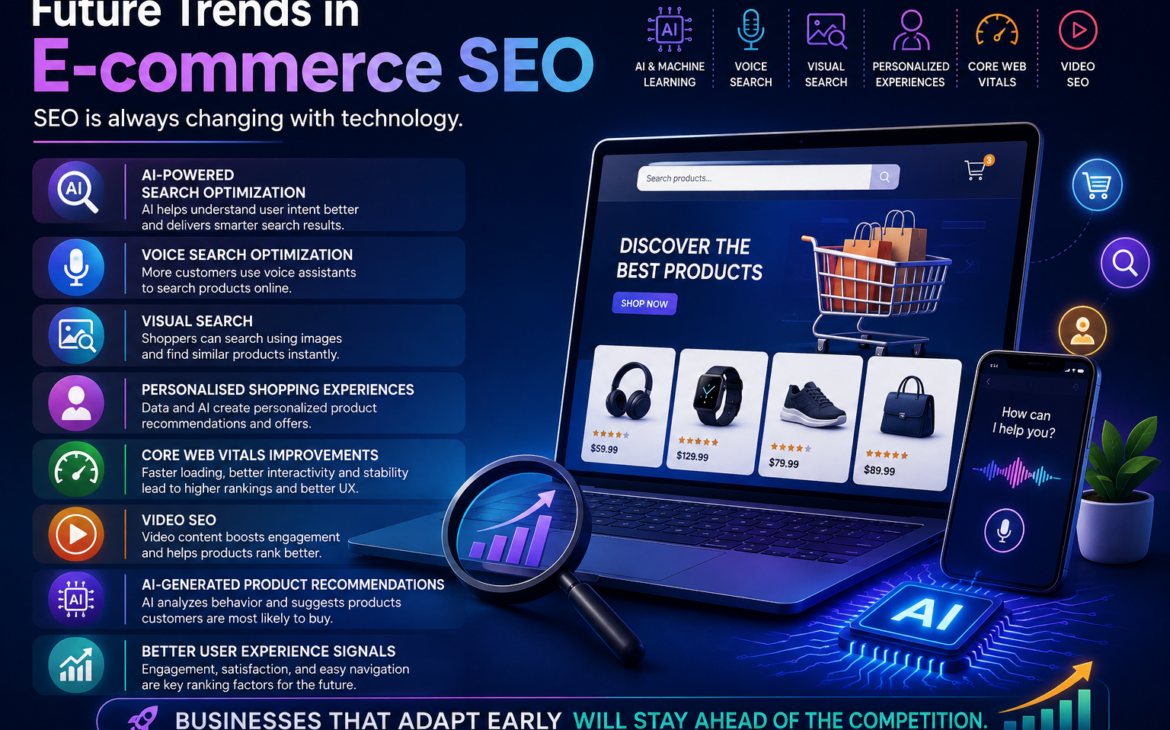
Future Trends in E-commerce SEO
SEO is always changing with technology.
New trends include:
powered search optimization
Voice search optimization
Visual search
Personalised shopping experiences
Core Web Vitals improvements
Video SEO
AI-generated product recommendations
Better user experience signals
Businesses that adapt early will stay ahead of the competition.
Conclusion
E-commerce SEO is one of the ways to increase online sales without relying on paid ads. By optimising product pages, making your website faster, targeting keywords, strengthening technical SEO and creating valuable content, businesses can attract targeted traffic that converts into loyal customers.
SEO is not something you do once and forget. It is a process that needs consistent monitoring and updates. As search engines change and customer behaviour changes, staying informed and optimising your store will help you keep strong rankings and grow sustainably. Investing in e-commerce SEO now can lead to visibility, more customer trust and long-term business success.
Frequently Asked Questions
1. What is e-commerce SEO?
E-commerce SEO is the process of making your online store visible in search engine results to get organic traffic and sales.
2. How long does e-commerce SEO take to show results?
SEO usually takes 3–6 months to show improvements, depending on how competitive your market is how good your website is and how consistent you are with optimisation.
3. Why are product descriptions important for SEO?
Unique product descriptions help search engines understand your products, reduce content duplication, and improve rankings while also building customer trust.
4. Is optimisation important for e-commerce SEO?
Yes, it is. Since most shoppers use devices, a fast and responsive website improves user experience and supports better rankings through Google’s mobile-first indexing.
5. Which SEO tools are best for e-commerce websites?
Good tools include Google Analytics, Google Search Console, Ahrefs, SEMrush, Screaming Frog and PageSpeed Insights. These tools help you monitor performance, find issues and optimise your website effectively.
Thank you for reading
Buy Web Hosting at an affordable price: Buy Now.
If you want to build your website at an affordable price, contact www.nextr.in
Read this: How AI is Changing Education