Future of Software Development: AI, Automation & Intelligent Applications
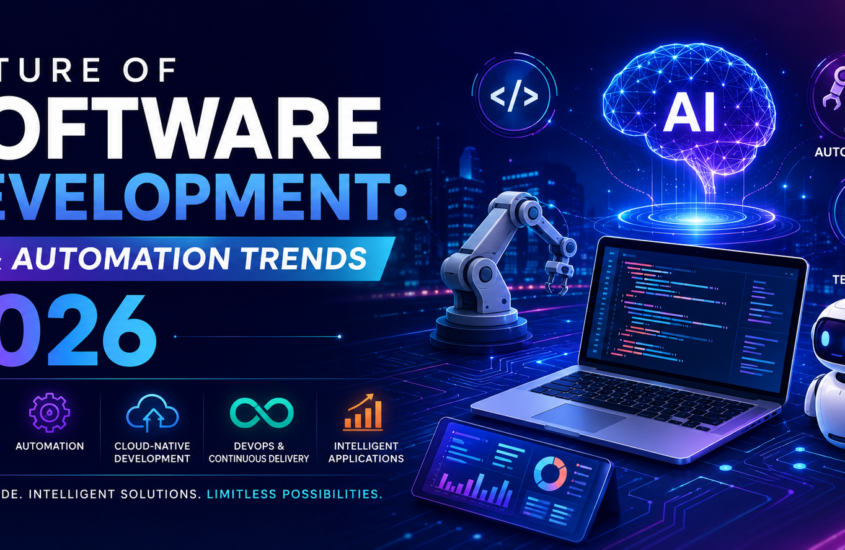
Software development is changing fast. In 2026, businesses want software that does more than just perform tasks. They want automated, secure and scalable applications that improve efficiency and deliver better user experiences. Technologies like Artificial Intelligence (AI), Machine Learning (ML), Robotic Process Automation (RPA), cloud computing, and intelligent automation are changing how software is designed, developed, tested, and maintained.
From AI- coding assistants to self-learning business applications, the future of software development is about speed, innovation and smarter decision-making. Many organisations across healthcare, finance, retail, manufacturing, logistics, education and e-commerce are adopting AI-driven solutions to stay competitive and meet growing customer expectations.
In this blog, we will explore how AI, automation and intelligent applications are shaping the future of software development. We will also discuss why businesses should embrace these technologies to achieve long-term success.
What is the Future of Software Development?
The future of software development is about creating systems. These systems can learn from data, automate tasks and make real-time decisions. Developers now integrate AI algorithms, automation tools, cloud infrastructure and predictive analytics into applications.
Modern software is becoming:
* AI-enabled
* Cloud-native
* Scalable
* Data-driven
* Secure by design
* User-centric
* Continuously updated through DevOps and CI/CD
This transformation helps businesses launch products faster. It also reduces costs and improves customer satisfaction.
How AI is Revolutionising Software Development
Artificial Intelligence has become a technology in modern software engineering.
1. Faster Code Generation
AI-powered development tools assist developers. They generate code snippets, identify syntax errors, recommend improvements, and automate repetitive coding tasks. This reduces development time. Improves productivity.
2. Smarter Bug Detection
AI can analyse thousands of lines of code. It detects vulnerabilities before deployment. Predictive bug detection helps developers resolve issues early. This reduces maintenance costs.
3. Intelligent Testing
AI-powered automated testing creates test cases. It executes them. Identifies application failures with minimal manual effort. This improves software quality. Accelerates release cycles.
4. Personalised User Experience
AI analyses customer behaviour and preferences. It delivers recommendations, content and services. This increases user engagement and satisfaction.
5. Predictive Analytics
Businesses use AI-powered software to forecast sales, customer demand, market trends and operational risks. This enables informed decision-making.
Automation is Changing the Development Process
Automation has become essential in software development.
Key areas where automation delivers value include:
* Continuous Integration & Continuous Deployment (CI/CD)
Automated deployment pipelines enable developers to release software updates. It minimises error.
* Infrastructure Automation
Cloud infrastructure can now be provisioned automatically. It reduces setup time from days to minutes.
* Automated Code Reviews
Modern development platforms automatically review code quality. They maintain coding standards. Improve consistency.
* Workflow Automation
Businesses automate tasks. Examples include invoice generation, customer support, HR management, inventory tracking and report generation.
The result is development, lower operational costs and improved software reliability.
Rise of Intelligent Applications
Applications combine AI, cloud computing, big data and automation. They deliver self-learning experiences.
Examples include:
* AI chatbots
* assistants
* Smart CRM systems
* Predictive healthcare platforms
* Fraud detection software
* Recommendation engines
* ERP solutions
* Smart logistics management systems
Unlike traditional software, intelligent applications continuously learn from user interactions. They improve their performance over time.
Cloud-Native Development is the Future
Modern software is increasingly built using native technologies.
Benefits include:
* Faster deployment
* scalability
* Automatic updates
* availability
* Lower infrastructure costs
* Improved disaster recovery
* Global accessibility
Cloud-native software allows businesses to scale resources based on demand. It does not require investment in physical infrastructure.
Low-Code and No-Code Development
Low-code platforms simplify software development. They allow users to build applications with programming knowledge.
Advantages include:
* Faster application development
* Lower development costs
* Rapid prototyping
* Easy maintenance
* Improved collaboration between business and IT teams
While professional developers remain essential for applications, low-code solutions accelerate digital transformation.
Cybersecurity Will Become More Important
As software becomes smarter, cyber threats also become more sophisticated.
Future software development will prioritise:
* powered threat detection
* Zero Trust Security
* Multi-factor authentication
* Secure APIs
* End-to-end encryption
* Continuous vulnerability scanning
* Compliance with global security standards
Building applications from the beginning will become a standard practice.
DevOps and Agile Will Continue to Dominate
Modern software teams increasingly rely on development and DevOps practices.
Benefits include:
* Faster releases
* improvements
* Better collaboration
* Improved software quality
* Reduced deployment failures
* Faster customer feedback integration
AI further enhances DevOps. It predicts risks and optimises software delivery pipelines.
Industries Benefiting from Intelligent Software
Every industry is adopting intelligent applications.
* Healthcare
+ AI diagnostics
. Patient management
+ Medical imaging
+ Telemedicine
* Finance
+ Fraud detection
+ Automated trading
+ Risk assessment
+ Personalised banking
* Retail
+ Smart inventory management
+ Product recommendations
+ Customer analytics
+ Automated checkout
* Manufacturing
. Predictive maintenance
+ Robotics
+ Supply chain optimization
+ Quality inspection
* Education
+ Personalised learning
+ AI tutoring
+ Student analytics
+ Virtual classrooms
* Logistics
+ Route optimization
+ Fleet management
+ Warehouse automation
+ Real-time shipment tracking
Skills Software Developers Need in the Future
To remain competitive, software developers should focus on learning:
* Artificial Intelligence
* Machine Learning
* Python
* JavaScript
* Cloud Computing
* DevOps
* Kubernetes
* Docker
* Cybersecurity
* Data Analytics
* API Development
* Microservices
* Git & CI/CD
* Prompt Engineering
* Software Architecture
Continuous learning will become essential. Technology evolves rapidly.
Business Benefits of AI-Powered Software Development
Businesses investing in software gain several advantages:
* Faster product development
* Reduced operational costs
* customer experience
* Increased employee productivity
* Improved business insights
* Enhanced cybersecurity
* Higher scalability
* Competitive advantage
* Better decision-making
* Greater innovation
These benefits help organisations stay ahead in a digital marketplace.
Challenges Businesses Should Consider
Although AI and automation offer opportunities, businesses should also address:
* Data privacy concerns
* AI implementation costs
* Integration with legacy systems
* Employee upskilling
* Ethical AI usage
* Cybersecurity risks
* Data quality issues
A planned digital transformation strategy can minimise these challenges. It maximises business value.
Conclusion
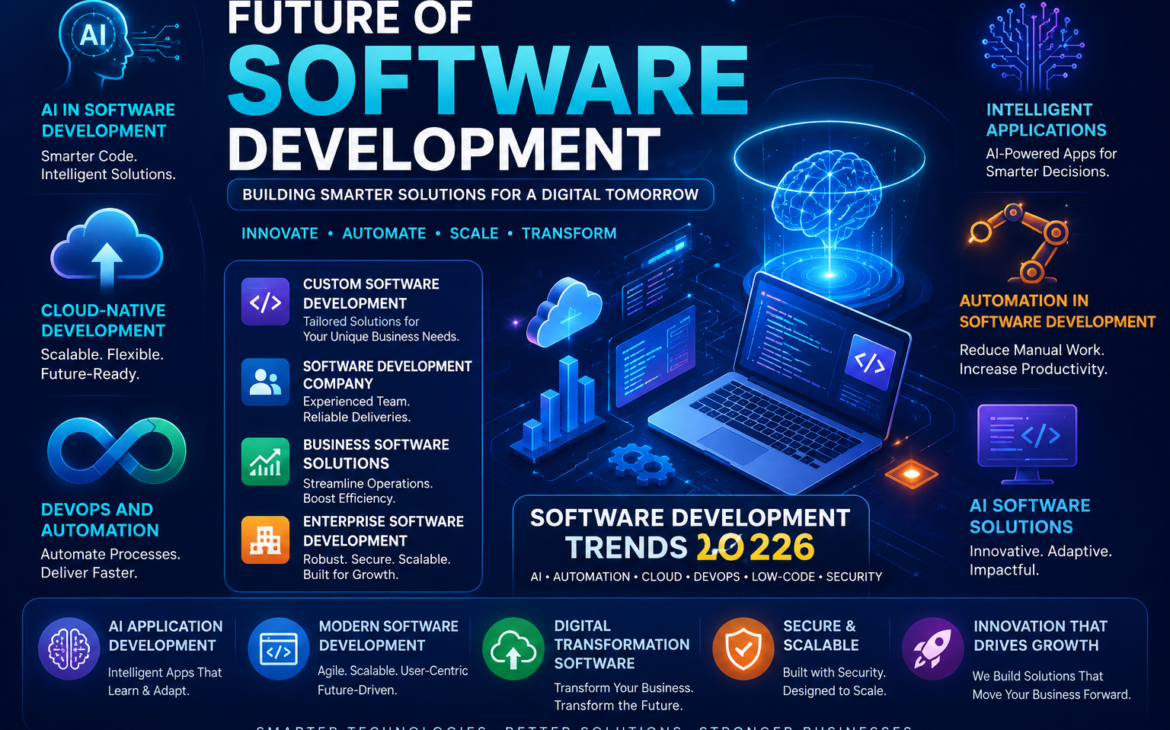
The future of software development is being shaped by Artificial Intelligence, automation, cloud computing and intelligent applications. These technologies transform how software is built, tested, deployed and maintained. They enable businesses to innovate and operate more efficiently.
Organisations that embrace AI-powered software development today will be better equipped to meet customer expectations. They will reduce costs, strengthen security and gain a competitive edge. Whether you’re a startup or a large enterprise, investing in software solutions is no longer optional. It’s a necessity for long-term growth in the digital era.
FAQs
1. What is the future of software development?
The future of software development focuses on AI, automation, cloud-native architecture, intelligent applications, DevOps and cybersecurity. It aims to build smarter and more scalable software solutions.
2. How is AI improving software development?
AI accelerates coding, automates testing, detects bugs, enhances security and provides analytics. It helps developers create high-quality software efficiently.
3. What are intelligent applications?
Intelligent applications use AI, machine learning, automation and real-time data. They learn from user behaviour, make decisions and deliver personalised experiences.
4. Why is automation important in software development?
Automation streamlines tasks. Examples include testing, deployment, infrastructure management and code reviews. It reduces errors. Improves development speed and software quality.
5. Which industries benefit most from AI-powered software?
Healthcare, finance, retail, manufacturing, education, logistics and e-commerce are among the industries that benefit significantly from AI-powered and intelligent software solutions.
Thank you for reading
Buy Web Hosting at an affordable price: Buy Now.
If you want to build your website at an affordable price, contact www.nextr.in
Read this: How AI is Changing Education