Physical AI: How Smart Machines Are Going Beyond Chatbots
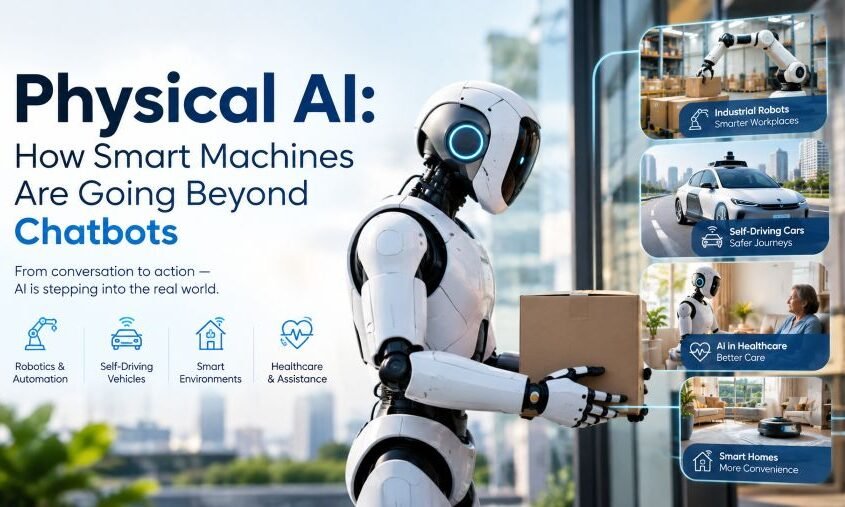
Artificial intelligence has changed a lot from text-based chatbots and digital helpers to systems that can understand and work in the world. This new area is called Physical AI. It brings together intelligence, robotics, computer vision, sensors, simulation and quick decision-making to make machines that can see their surroundings and take real actions. Unlike AI systems that mainly create text, images or suggestions AI-powered robots can watch an environment understand whats happening make choices and do tasks.
The growth of machines is becoming a big part of the next step in AI technology. Modern robot research is focusing more on systems that can learn from examples change when things are different and do tasks instead of just following fixed instructions. NVIDIA for example calls AI systems that can see think, learn and act in changing physical places.
For companies this change could affect manufacturing, logistics, healthcare, farming, retail, building and other areas where smart machines can work directly with people and physical items. The shift from AI to physical artificial intelligence is a big change in how AI can be used outside of computers and phones.
What Is Physical AI and How Is It Different From Traditional AI?
Physical AI means intelligence that works and makes choices in the real world. A chatbot can read a question. Give an answer but a physical AI robot has to understand space, items, motion, forces, distance, barriers and results before it acts. This makes robots more complicated because mistakes can have real effects.
An AI robot usually uses different technologies. Cameras and other sensors let the machine collect data about its surroundings. Computer vision helps it find objects and people while AI models interpret what to do. Robotics software then turns those decisions into actions with wheels, arms, grippers, legs or other parts.
One big step forward in this area is the rise of robot foundation models and vision-language-action systems. These models try to connect seeing, speaking, thinking and doing. Of programming every move developers can teach robots to understand overall tasks and change how they act in different situations. NVIDIAs robotics systems for example use AI models, simulation, robot learning and edge computing for building and putting robots to work.
Another key technology is the world model for robotics. World models try to show how an environment changes and predict what might happen after an action. This is very useful for robots because they can’t just react to what they see; they often need to guess what might happen from their movement. The World Economic Forum says world models can use pictures and sensors to guess how the world might respond to actions.
This is where the difference between Physical AI and generative AI becomes important. Generative AI mostly. Changes digital stuff while physical AI links smart thinking with seeing and doing. The two aren’t enemies. Generative AI can help robots understand language and think better while physical AI lets those skills work in the world.
How Smart Machines Are Learning, Thinking and Acting in the World
The biggest change in modern robotics is that robots are no longer just doing things that are very predictable. Old industrial robots can be great when the environment is controlled. When things change like products, layouts, objects and work plans, more programming and testing is needed.
Modern smart robots want to make machines more flexible. Robots can be taught using real-life examples, simulations, fake data, remote control and learning by doing. Simulation is especially important because developers can test robots in strange situations without putting real machines or people in danger.
In 2026 robotics platforms are using real-world simulations and digital places more to teach and test robot behavior before they go into action. NVIDIAs robotics platform includes simulation, fake data, robot learning and digital twins as parts of making physical AI.
Recent progress also shows how fast this field is growing. In September 2026 NVIDIA said that Skild AIs S1 robot model was made to learn long-term tasks from just one video. The system is meant to understand the task and turn it into actions without having to be retrained for each thing.
This shows a path for future robot tech: teaching robots what to do instead of programming every movement.
Imagine a warehouse robot told to move a box. A normal system might use set coordinates and rules. A better physical AI system could find the box understand the area plan a way grab the item spot a surprise block and change its actions.
In the way a robot in a factory could change when parts are placed differently or a new assembly is needed. In health care smart robots could help with moving things or some support jobs. In farming AI machines could check crops. Work with plants or the ground. In logistics robots could help move goods in warehouses and places where things are sent.
Ai robots still have big problems. Real-world areas are tricky sensors can be faulty. Ai models can guess wrong. A robot that works well in a simulation might face friction, light, weight or people in the real world. The World Economic Forum says this is a problem and says simulated places need to match results.
Safety is very important. Physical AI systems need to be tested with hardware, software, seeing, decisions and environments. As robots get more free safety can’t be the thing done before they are used.
Uses and the Future of Physical AI in Business
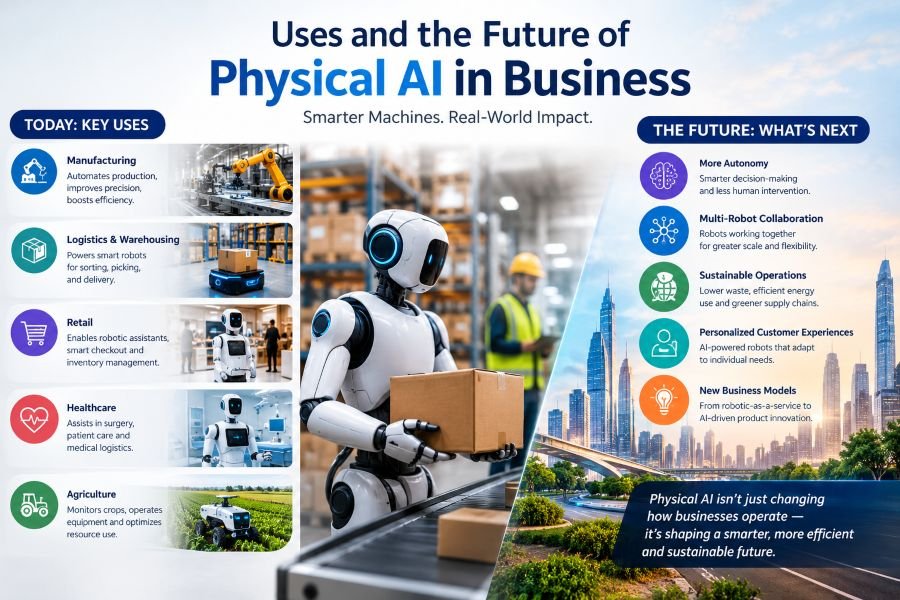
Physical AI has possible uses because almost every physical business process has movement, checking, moving, handling or working with an environment.
In manufacturing AI robots can help with putting things checking moving materials and repeating tasks. In warehouses robots can move around carry products and help with inventory. Logistics companies can use machines for sorting, moving and maybe delivering to the last stop.
Health care is also growing. Robots can help with moving supplies, cleaning and some patient help. Farming can get better with machines that check crops help with picking find weeds and do jobs. Retail and hotels might use robots for inventory sending things cleaning and helping people.
Humanoid robots are one of the visible parts of Physical AI. Their human shape is meant to help them work in places made for people even though putting them to work is still an engineering challenge. Current robot systems are being built for humanoids, robotic arms, self-moving robots and other forms.
Another important trend is using AI, robots and edge computing together. Robots often need to make choices fast when working around people or moving things. Processing data near the robot can help reduce depending on computers and help with quick responses.
The future might also have more working between people and smart machines. Of taking over every job physical AI can do the repeating, dangerous, hard or very regular tasks while people do supervision, creativity, decisions and special work.
For companies looking at this tech using it will need more than buying a robot. Organizations need the data, setup, connecting, security, safe ways, skilled workers and clear ways to use it. The best uses are likely to start with problems that can be clearly fixed by automation.
Conclusion
Physical AI is making artificial intelligence go beyond screens and into the world. While chatbots and generative AI can understand and make stuff smart robots use AI with sensors, machines, software and quick control to see places and do real tasks.
The rise of robot foundation models, world models, simulation, fake data and edge AI is helping scientists and companies build flexible robot systems. Recent changes show that robots can learn from examples and react to changing places of depending only on strict programming.
As the tech gets better Physical AI in robots could become a part of factory work moving things, health care, farming and other areas. Its progress will depend on steps in AI models, machines, simulation, safety and testing in real life.
FAQs
1. What is Physical AI?
Physical AI is intelligence made to see, understand and work in the real world using robots, self-driving machines, vehicles and other smart systems.
2. How is Physical AI different from chatbots?
Chatbots mostly deal with and make stuff while Physical AI systems connect thinking with sensors, movement and real-world actions.
3. What tech is used in machines?
Important tech includes computer vision, robotics, machine learning, robot foundation models, world models, sensors, simulation, learning by doing, edge computing and quick control systems.
4. Where can Physical AI be used?
Possible uses include factories, warehouses, logistics, health care, farming, retail, building, checking and self-driving transport.
5. Will Physical AI replace people?
Its effect will depend on the industry and the job. Physical AI can do some repeating, dangerous or hard jobs while many uses are, about working with people and helping them.
Thank you for reading
Buy Web Hosting at an affordable price: Buy Now.
If you want to build your website at an affordable price, contact www.nextr.in
Read this: How AI is Changing Education