How AI Artificial Intelligence Is Changing Search Engine Optimisation Strategies in 2026
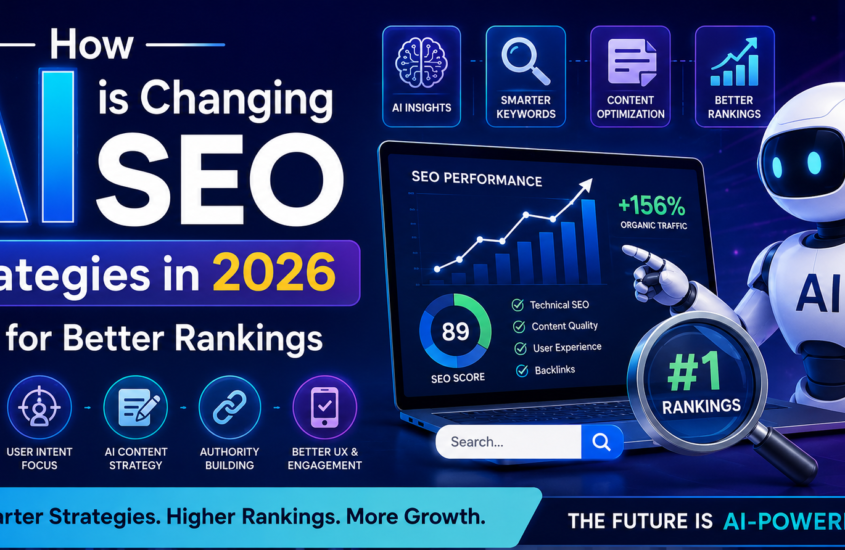
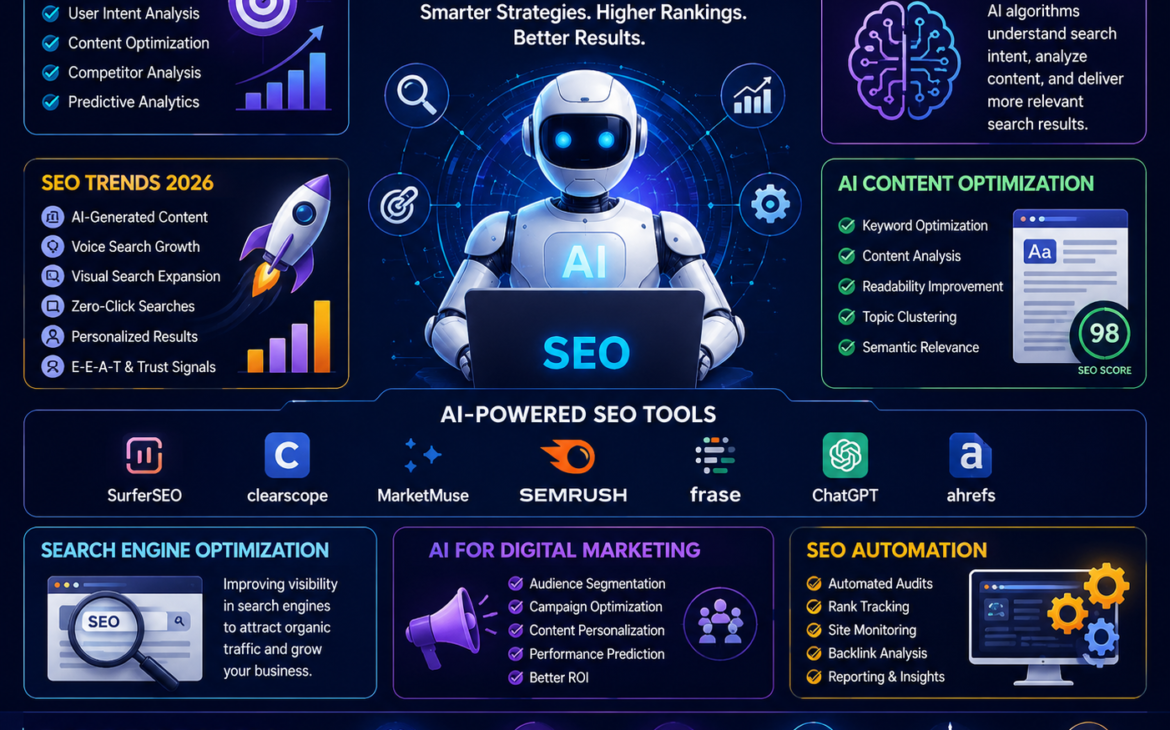
Search Engine Optimisation has always changed as technology gets better. Search Engine Optimisation used to be about putting lots of keywords on a website and getting websites to link to it. Now, Search Engine Optimisation, AI is about making sure users have a good experience on a website and that the website is what users are looking for. In 2026, Artificial Intelligence is playing a role in changing Search Engine Optimisation strategies. Artificial Intelligence is helping businesses get search rankings, understand what users are doing and create better content.
Artificial Intelligence is changing how search engines look at websites and how marketers make their websites visible online. As search engines get smarter, people who work on Search Engine Optimisation need to change their strategies to stay competitive.
Understanding the Role of Artificial Intelligence in Search Engine Optimisation
Artificial Intelligence is when machines and software can do things that normally require intelligence. Search engines like Google use Artificial Intelligence to understand what users are looking for and look at the quality of content. Give users the most relevant search results.
Nowadays, Search Engine Optimisation is not about keywords. Artificial Intelligence helps search engines understand the context, what users are doing and how relevant the content is. This means marketers need to focus on making quality content that users will like.
Artificial Intelligence-Powered Search Algorithms
One of the ways Artificial Intelligence is changing Search Engine Optimisation is through advanced search algorithms. Google’s Artificial Intelligence systems can understand language, context and what users are looking for better than ever before.
These algorithms look at things like:
* What users are searching for
* How relevant the content is
* How good the website is
* How users interact with the website
* How good and original the content is
Websites that give users what they are looking for and answer their questions well are more likely to get rankings.
Better Keyword Research
In the past, people doing keyword research just looked at how many people were searching for something and how hard it was to get a ranking. Now Artificial Intelligence-powered Search Engine Optimisation tools give insights into what users are looking for, related keywords and what is trending.
The benefits of using Artificial Intelligence for keyword research include:
* Finding keywords that’re not as competitive
* Understanding what users are looking for
* Predicting what users will be searching for in the future
* Looking at what keywords competitors are using
* Finding gaps in content
This helps marketers create content that’s more relevant to what users are searching for.
Artificial Intelligence Generated Content and Optimisation
Artificial Intelligence writing tools are getting more popular for creating content. These tools help businesses make blog posts, product descriptions, social media posts and website content efficiently.
However, to be successful with Search Engine Optimisation in 2026, you need more than just Artificial Intelligence-generated content. Search engines want content that shows expertise, trustworthiness and authority.
Best practices include:
* Using Artificial Intelligence as a tool to help with content
* Adding insights and expertise to the content
* Making sure the facts are correct
* Creating valuable content
* Making sure the content is easy to read
Using Artificial Intelligence to help with content and adding creativity produces the best Search Engine Optimisation results.
Better User Experience
User experience is now a factor in search rankings, and Artificial Intelligence is helping businesses make their websites better and more engaging.
Artificial Intelligence can look at:
* What users are doing on the website
* How users navigate the website
* How many users leave the website without doing anything
* How many users click on things
* How users get to the website
Based on these insights, businesses can make their websites better and more engaging.
Key improvements include:
* Making the website load faster
* Giving users personalised content recommendations
* Making the website work better on devices
* Making the website easier to navigate
* Making the website more accessible
When users have an experience on a website, they stay longer and are more likely to come back.
Voice Search Optimisation
More and more users are using voice search, and Artificial Intelligence is powering this technology. This means marketers need to optimise their content for search.
To optimise for voice search:
* Use language
* Target keywords that are questions
* Create FAQs
* Optimise for searches
* Focus on featured snippets
Voice searches are often longer and more conversational than text searches.
Predictive Search Engine Optimisation and Data Analysis
Artificial Intelligence enables analytics, which helps marketers anticipate future search trends and user behaviour.
With Search Engine Optimisation, businesses can:
* Predict how well keywords will do
* Identify new topics in their industry
* Look at search patterns
* Predict changes in user behaviour
* Plan content strategies ahead of time
This data-driven approach helps organisations stay ahead of their competitors and adapt to changes in the market.
Artificial Intelligence-Powered Technical Search Engine Optimisation
Technical Search Engine Optimisation can be complicated and time-consuming. Artificial Intelligence tools simplify technical optimisation tasks by automatically finding issues and recommending solutions.
Artificial Intelligence can help with:
* Checking the website for issues
* Finding broken links
* Looking at crawl errors
* Implementing schema markup
* Making the website load faster
* Improving indexing
By automating these tasks, Search Engine Optimisation professionals can focus more on strategy and content development.
Personalised Search Results
Search engines now use Artificial Intelligence to give users personalised search results. Results can vary based on things like:
* Where the user is located
* What the user has searched for before
* What device the user is using
* What the user likes
* How the user behaves online
Because of this personalisation, businesses need to create content that serves groups of users while still being relevant and high quality.
Visual Search and Artificial Intelligence
Visual search technology is getting better. Users can now search using images of text, and Artificial Intelligence helps search engines understand image content more accurately.
To optimise for search:
* Use descriptive filenames for images
* Add relevant alt text to images
* Compress images to make them load faster
* Use high-quality images
* Implement data
Visual search gives new opportunities for businesses that sell products online and content creators to get organic traffic.
The Future of Artificial Intelligence in Search Engine Optimisation
As Artificial Intelligence technology gets better, Search Engine Optimisation strategies will be more data-driven and focused on users. Future developments may include:
* advanced analysis of search intent
* Hyper-personalised search experiences
* Automated content optimization
* Better predictive analytics
* Improved voice and visual search capabilities
Businesses that use Artificial Intelligence-powered Search Engine Optimisation tools and strategies will be better positioned to achieve online growth.
Conclusion
Artificial Intelligence is fundamentally changing Search Engine Optimisation strategies in 2026 by improving keyword research, content optimisation, technical Search Engine Optimisation, user experience and search personalisation. While Artificial Intelligence offers automation and analytical capabilities, human expertise is still essential for creating authentic, valuable and trustworthy content.
Successful Search Engine Optimisation strategies combine the efficiency of Artificial Intelligence with human creativity and strategic thinking. Businesses that adapt to these changes and use Artificial Intelligence responsibly will be able to improve search visibility, attract qualified traffic and maintain a competitive advantage in the digital marketplace.
FAQs
1. What is Artificial Intelligence in Search Engine Optimisation?
Artificial Intelligence in Search Engine Optimisation refers to the use of Artificial Intelligence technologies to improve search engine optimisation through automation, data analysis, content optimisation, and user behaviour insights.
2. How does Artificial Intelligence help improve search rankings?
Artificial Intelligence helps identify keyword opportunities, optimise content, enhance user experience, analyse competitors and improve website performance, which can positively impact rankings.
3. Can Artificial Intelligence completely replace Search Engine Optimisation professionals?
No. Artificial Intelligence can automate tasks. Provide recommendations, but human expertise is still necessary for strategy, creativity, content quality and decision-making.
4. What are the best Artificial Intelligence tools for Search Engine Optimisation?
Popular Artificial Intelligence-powered Search Engine Optimisation tools include content optimisation platforms, keyword research tools, audit software and analytics solutions that help improve website performance.
5. How does Artificial Intelligence affect content creation for Search Engine Optimisation?
Artificial Intelligence can assist with content generation, topic research and optimisation. However, quality human input is still essential to ensure originality, accuracy and user value.
Thank you for reading
Buy Web Hosting at an affordable price: Buy Now.
If you want to build your website at an affordable price, contact www.nextr.in
Read this: How AI is Changing Education