The Future of SaaS Applications: Trends, Innovations and Opportunities in 2026
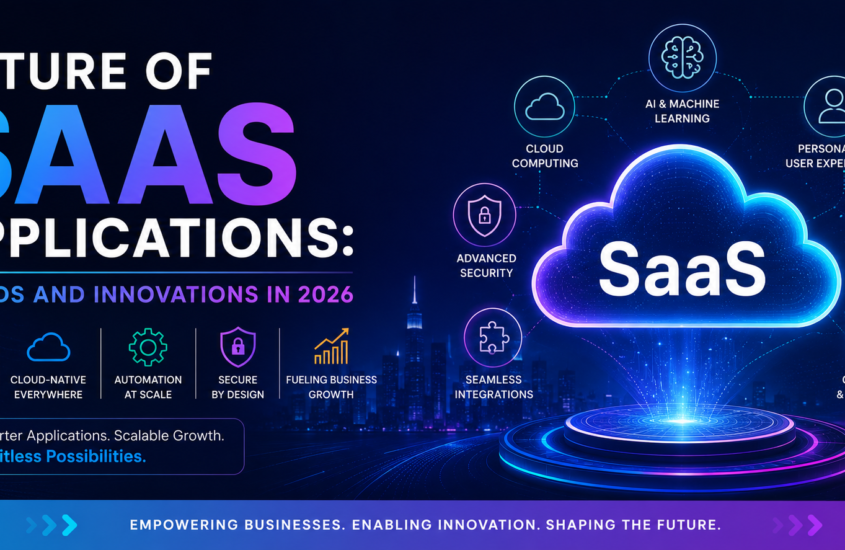
Software as a Service, or SaaS, has changed the way companies use software. By buying and taking care of expensive software on their own servers, companies can now pay a subscription to use software that is hosted in the cloud. This gives them flexibility, scalability and saves them money. SaaS applications are used for all sorts of things like managing customer relationships, projects and company resources.
As technology keeps getting better the future of SaaS applications is looking very promising. New technologies like Artificial Intelligence, Machine Learning and cloud-native architecture are changing the way SaaS applications are made. Companies are trying to make software that’s smart, personalised, and can grow with their needs.
In this blog, we will talk about what the future of SaaS applications will be like. We will look at the trends that are driving innovation, the challenges that companies face and the opportunities that will shape the SaaS industry in 2026 and beyond.
What are SaaS Applications?
SaaS applications are software that is hosted in the cloud and can be accessed through a web browser or mobile device. You do not need to install any software on your computer to use them.
Some popular examples of SaaS applications include:
* Customer Relationship Management software
* Accounting and Finance platforms
* Human Resource Management systems
* Project Management tools
* Marketing Automation platforms
* Communication and Collaboration software
* E-commerce solutions
The good thing about SaaS applications is that companies do not have to pay a lot of money up front. They can just pay a subscription. Get regular updates and new features.
Why are SaaS Applications so Popular?
SaaS applications are popular because they offer benefits, including:
* Cost Efficiency: companies do not have to buy expensive hardware or software
* Scalability: companies can easily add or remove users as needed
* Accessibility: users can access SaaS applications from anywhere with an internet connection
* Updates: the software is always up to date, so companies do not have to worry about updating it themselves
* Deployment: SaaS applications can be set up quickly, so companies can start using them right away
These benefits make SaaS applications a great choice for companies of all sizes.
Key Trends Shaping the Future of SaaS Applications
1. Artificial Intelligence-Powered SaaS
Artificial Intelligence is becoming a part of SaaS applications. In the future, SaaS platforms will use Artificial Intelligence to:
* Predict what customers will do
* Make recommendations
* Automatically answer customer questions
* Understand natural language
* Make decisions using Artificial Intelligence
For example, a Customer Relationship Management system can use Artificial Intelligence to predict what a customer will do next. A marketing platform can use Artificial Intelligence to create campaign strategies.
Artificial Intelligence will make SaaS applications more efficient, reduce work and improve the user experience.
2. Hyper-Personalisation
Users expect SaaS applications to be personalised to their needs. In the future, SaaS applications will use Artificial Intelligence and data analytics to provide personalised:
* Dashboards
* Recommendations
* Workflows
* Content
Companies will be able to:
* Give customers an experience
* Improve user engagement
* Increase productivity
* Keep customers coming back
Personalisation will be a factor in what makes a SaaS application successful.
3. Low-Code and No-Code Development
Low-code and no-code platforms are changing the way software is developed. These platforms allow users to build applications without needing to know how to code. They use interfaces and drag-and-drop functionality to make it easy to build applications.
The benefits of code and no-code development include:
* Faster application development
* Lower development costs
* More innovation
* business agility
In the future, more companies will use low-code SaaS solutions to speed up their digital transformation.
4. SaaS Automation and Workflow Intelligence
Automation is becoming a part of business operations. In the future, SaaS applications will automate:
* Customer support processes
* Marketing campaigns
* Data entry tasks
* operations
* Employee onboarding
Advanced workflow intelligence will allow companies to streamline their operations and focus on growing their business.
5. Vertical SaaS Solutions
of making software for a wide range of industries, SaaS providers are making software that is specific to one industry. Examples include:
* Healthcare SaaS
* Logistics SaaS
* Real Estate SaaS
* Manufacturing SaaS
* Education SaaS
Vertical SaaS applications provide features that are specific to one industry, which makes them more effective than generic platforms.
6. Enhanced Cybersecurity and Compliance
As cyber threats get more sophisticated, SaaS providers need to prioritise security. In the future, SaaS applications will have:
* Multi-Factor Authentication
* Zero Trust Security Models
* End-to-End Encryption
* Real-Time Threat Detection
* Automated Compliance Monitoring
Companies that handle customer information will expect SaaS applications to have strong security measures.
7. Cloud-Native Architecture
Cloud-native technologies are becoming the foundation of SaaS development. Key components include:
* Microservices
* Containers
* Kubernetes
* Serverless Computing
Cloud-native architecture makes SaaS applications more scalable, reliable and performant. It also reduces complexity.
8. Integration Ecosystems
Companies use different software platforms at the same time. In the future, SaaS solutions will prioritise integration. Applications will easily connect with:
* CRM Systems
* ERP Platforms
* Payment Gateways
* Analytics Tools
* Communication Platforms
APIs and integration marketplaces will be essential features of successful SaaS products.
9. Data-Driven Decision Making
Companies generate a lot of data every day. SaaS applications will increasingly include analytics capabilities, such as:
* Real-Time Reporting
* Predictive Analytics
* Business Intelligence Dashboards
* Automated Insights
These tools will help companies make faster and more informed decisions.
10. Mobile-First SaaS Experiences
More and more people are working remotely. Using their mobile devices to get work done. In the future, SaaS applications will focus on:
* Mobile Optimisation
* Cross-Platform Accessibility
* Real-Time Collaboration
* Offline Functionality
Users will expect SaaS applications to work seamlessly on their smartphones, tablets and desktops.
Opportunities in the SaaS Industry
The future of the SaaS industry presents opportunities for:
* Entrepreneurs: who can start SaaS companies that solve specific problems
* Developers: who can work on cloud Artificial Intelligence and SaaS projects
* Businesses: that can use SaaS tools to improve efficiency, reduce costs and improve customer experiences
* Investors: who can invest in SaaS companies that have a lot of potential for growth
Challenges Facing Future SaaS Applications
While the outlook is positive, SaaS providers face challenges, including:
* Increasing Competition
* Data Privacy Regulations
* Cybersecurity Risks
* Customer Retention Challenges
* Rising Infrastructure Costs
* Complex Integration Requirements
Companies that can overcome these challenges will have a competitive advantage in the market.
The Future Outlook
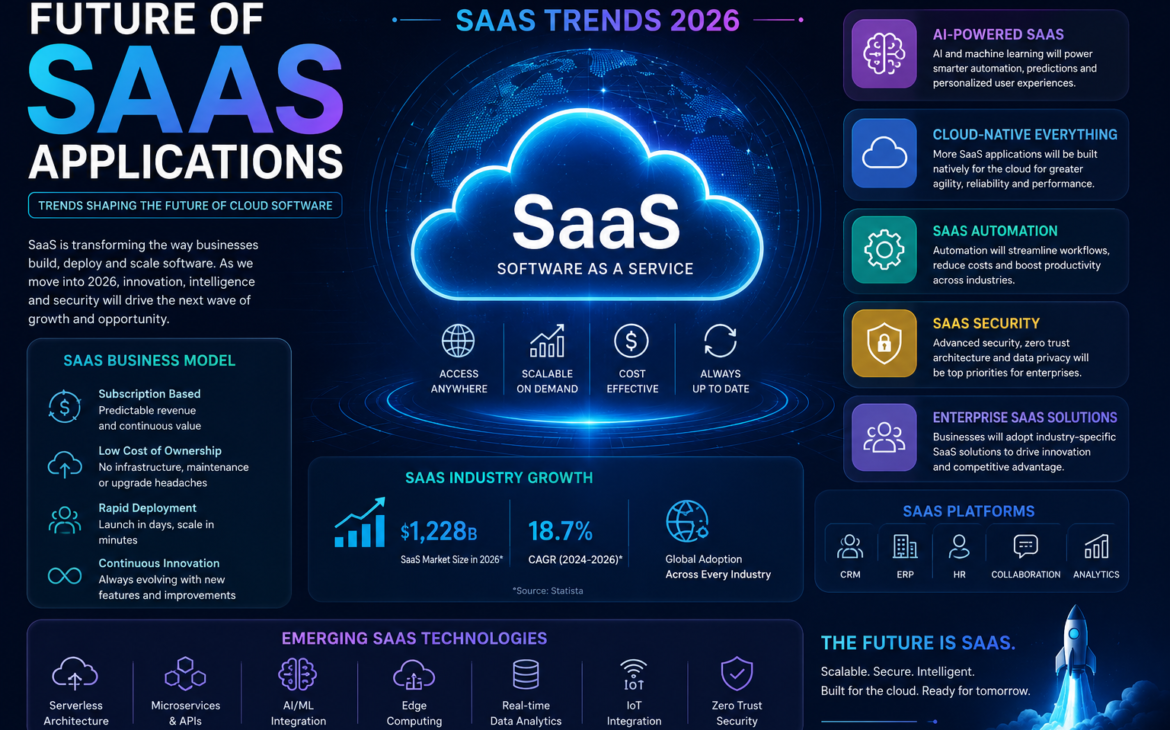
By 2026 and beyond, SaaS applications will be more intelligent, automated, secure and user-centric. Artificial Intelligence, cloud- technologies, advanced analytics and hyper-personalisation will change the way companies interact with software.
Companies will rely more and more on SaaS platforms to drive innovation, improve efficiency and support digital transformation initiatives. As companies adopt work, automation and data-driven strategies, SaaS applications will be at the centre of modern technology ecosystems.
Frequently Asked Questions (FAQs)
1. What is the future of SaaS applications?
The future of SaaS applications includes Artificial Intelligence integration, automation, cloud-native development, enhanced security and personalised user experiences.
2. Why are SaaS applications becoming more popular?
SaaS applications offer cost savings, scalability, accessibility, automatic updates and rapid deployment compared to software.
3. How will Artificial Intelligence impact SaaS platforms?
Artificial Intelligence will improve automation, analytics, customer support, personalisation, and business decision-making within SaaS applications.
4. What is Vertical SaaS?
Vertical SaaS refers to software solutions that are designed for one industry, such as healthcare or logistics.
5. Is SaaS secure for businesses?
Modern SaaS platforms use security measures, including encryption, multi-factor authentication, compliance monitoring and threat detection systems.
6. What technologies will shape SaaS in 2026?
Artificial Intelligence, Machine Learning, Cloud Computing, Automation, Low-Code Development, Cybersecurity and Advanced Analytics will have an impact on SaaS innovation.
7. Why is cloud-native architecture important for SaaS?
Cloud-native architecture improves scalability, flexibility, performance and reliability while enabling software development and deployment.
Conclusion
The future of SaaS applications is about innovation, intelligence and scalability. As companies continue to adopt transformation, SaaS solutions will become more sophisticated, offering Artificial Intelligence-powered automation, personalised experiences, advanced security and seamless integrations. Companies that adopt next-generation SaaS technologies will have operational efficiency, improved customer experiences and a stronger competitive advantage.
For entrepreneurs, developers and companies, the SaaS industry presents opportunities for growth. As cloud computing and emerging technologies continue to evolve, SaaS applications will remain one of the important drivers of digital business success in the years ahead.
Thank you for reading
Buy Web Hosting at an affordable price: Buy Now.
If you want to build your website at an affordable price, contact www.nextr.in
Read this: How AI is Changing Education