Deepfake Detection Technology: New Ways to Identify AI-Generated Content
Artificial intelligence has changed how digital content is made. It also brings a growing problem: deciding whether an image, video or audio recording is real. Deepfake detection technology is becoming more important as generative AI tools can produce realistic synthetic content in seconds. From videos and cloned voices to altered photographs deepfakes can be hard to spot with just the human eye or ear. In 2026 businesses, technology companies, cybersecurity teams, media organizations and online platforms are looking for ways to identify and confirm AI‑generated content.
A deepfake is a kind of media that is created or changed using artificial intelligence. It can involve face swapping, voice cloning, realistic AI‑generated people altered video or changed photographs. The technology behind these creations keeps improving making old signs of manipulation less trustworthy. According to the U.S. National Institute of Standards and Technology (NIST) systems that detect content can lose a lot of accuracy when moving from controlled academic tests to real‑world use.
This shows the need for advanced deepfake detection technology. Than relying on one hint modern methods can combine AI classifiers, digital watermarks, metadata analysis, content provenance, forensic checks and cryptographic verification. The aim is not just to ask whether something “looks fake ” but to discover where deepfake content came from how it was made, whether it was changed and whether its history can be trusted.
How Deepfake Detection Technology Identifies AI-Generated Content
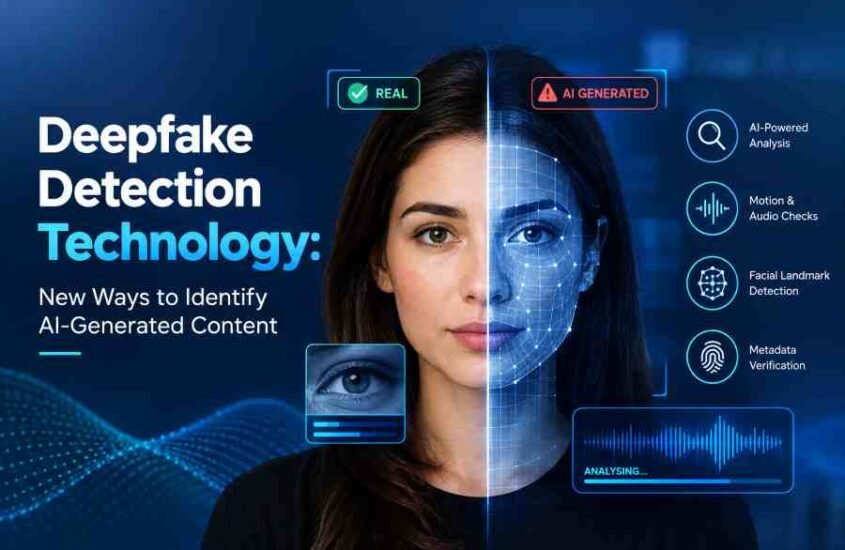
Modern deepfake detection technology uses intelligence and digital forensics to spot patterns that may show something is synthetic or altered. AI detection models can look at images and videos for inconsistencies in facial movements, lighting, shadows, textures, pixels and other details. For audio detection systems may analyze speech patterns, acoustic features, unnatural pauses, frequency clues and traits that differ from recorded voices. These systems can examine amounts of content much faster than a person could.
An important step is the use of machine learning models that are trained on both AI‑generated data sets. During training the models learn the traits that belong to media. When a new image or video is checked the system looks for patterns that may show AI creation or manipulation. Still AI‑generated content detection is not perfect. Generative AI models change all the time so a detector trained on one method may not work well against newer methods.
NIST’s current deepfake forensics work focuses on testing detection systems under conditions, such as adversarial attacks, face swapping, body swapping, context changes, image compression and other real‑world complications. This reminds businesses that a detection system should be tested with data instead of just laboratory performance.
Another big step is AI watermarking. Of trying to find an AI‑generated file only after it is made watermarking can add a hidden signal while the file is created. Google’s SynthID is one example. Google says its watermarking technology puts signals into AI‑generated content and has expanded verification across products like Gemini, Search and Chrome.
Digital watermarking can help show whether content came from a supported AI system… Watermarking alone cannot solve the whole deepfake problem because not every AI system uses the same watermark and content can be changed or shared through different platforms. That is why researchers and technology companies are mixing watermarking with verification methods.
Content provenance is another approach. Provenance focuses on the history of an asset instead of trying to find manipulation just from its visual or audio traits. The Coalition for Content Provenance and Authenticity (C2PA) has made Content Credentials that can give data about how digital content was made and edited. Its 2026 guidance shows ways to tell if content was generated, AI‑assisted, captured by a device or later changed.
This marks a change, in how digital authenticity can be addressed. Of only asking, “Can AI detect whether this image is fake?” technology can also ask, “Can we verify the origin and editing history of this image?”
New Ways to Verify Deepfakes and Digital Content in 2026

The future of deepfake detection is heading toward a layered verification model. AI detection still matters,. It is being paired with content credentials, digital watermarking, metadata, fingerprinting and forensic analysis. This method is especially useful because no single technology can reliably spot every type of media.
Content Credentials are becoming a part of this ecosystem. They can attach tamper‑evident information to media and record important stages in its life cycle. C2PA’s 2026 guidance explains categories for AI‑generated and non‑synthetic content details about AI modifications and notes on creation and editing actions. For publishers, businesses, photographers, creators and technology platforms this can give transparency about the origin of digital assets.
Digital fingerprinting is another technique being explored for authentication. A fingerprint makes a representation of a piece of digital content letting systems spot related material or find possible changes. Microsoft research talked about media integrity and authentication methods such as provenance, imperceptible watermarking and soft‑hash fingerprinting while stressing that no single solution can stop digital deception alone.
Metadata analysis can also offer evidence. Details about file creation editing software, timestamps, device information and other technical aspects can sometimes help investigators see a file’s history… Metadata should not automatically be seen as proof of authenticity because it can be deleted or altered. In high‑risk situations many sources of evidence are more helpful than relying on a technical signal.
The role of AI‑powered forensics is also growing. Forensic systems can examine images, videos, audio recordings and other digital evidence for manipulation. NIST’s ongoing Guardians of Forensic Evidence program focuses on evaluating deepfake detection technologies and bridging the gap between research prototypes and real‑world forensic use.
For businesses these developments matter in practice. Companies use images, video meetings, voice chats, identity documents, ads, customer‑generated content and online transactions more and more. A convincing deepfake could be used for impersonation, fraud, misinformation, social engineering or reputational attacks. Therefore organizations must see deepfake detection technology as part of a cybersecurity and digital trust plan.
A useful approach is to verify high‑risk content before making decisions. Organizations can set up workflows where suspicious media is examined through layers, such as source verification, metadata inspection, provenance check, AI detection and human review. For identity‑related cases extra authentication methods can also be used of relying only on a photo or video.
At the time businesses should know the limits of AI detection. The UK government’s 2026 assessment of the deepfake detection market says the technology is still early in its development. Thus an AI detector’s result should be seen as one piece of evidence not a final answer.
Why Deepfake Detection Matters for the Future of Digital Trust
The rise of deepfake technology is changing what digital trust means. For years people could usually assume that a photo, video or voice recording showed something that really happened. Generative AI has weakened that belief. Today realistic synthetic content can be made fast. Sent worldwide through social media, websites, messaging apps and other digital channels.
This makes deepfake detection technology more relevant to cybersecurity, digital marketing, finance, media, education, government, e‑commerce and online communication. Businesses need ways to check whether content is genuine before using it for decisions or showing it to customers.
The future will likely use a mix of content detection, watermarking, Content Credentials, digital fingerprints metadata analysis and forensic investigation. Of relying on one detector organizations can create layered verification systems that give stronger evidence about where digital content comes from and whether it is authentic.
Google’s recent expansion of SynthID and Content Credentials verification shows how big technology platforms are moving toward content transparency tools. Meanwhile C2PA’s ongoing work, on provenance standards shows how the industry is moving toward common ways to say whether and how AI was involved in digital content.
For technology companies and businesses this means digital trust should be part of long‑term tech planning. Website security, identity verification, cybersecurity, content moderation and digital media workflows may need ways to confirm content authenticity.
Conclusion
Deepfake detection technology is quickly changing because artificial intelligence creates images, videos and audio that look very real. Today deepfake detection technology uses machine learning, forensic analysis, watermarking, metadata, digital fingerprints and content provenance to spot or confirm content… No single method works for every case. New research from NIST and industry work on SynthID and C2PA show that layered verification is becoming more important.
For businesses digital trust will not just be about finding fakes. It will also mean proving content is real knowing how it was made and keeping records of its digital history. As AI keeps changing companies that use AI content verification and digital authentication can be ready for the next generation of online communication.
FAQs
What is deepfake detection technology?
Deepfake detection technology uses intelligence, machine learning, digital forensics, watermarking, metadata analysis and content provenance to spot or confirm AI‑generated or edited images, videos and audio recordings.
How does AI detect deepfake videos?
AI-powered deepfake detection tools look at motions, image patterns, lighting, pixels, audio traits and other digital clues to find inconsistencies that show a media file is synthetic or altered. Advanced tools use several methods instead of just one signal.
Can deepfake detection technology detect AI-generated images?
Yes. Tools that detect AI-generated content can examine images for patterns that show the image was made or altered by a computer. Still how well they work can change based on the AI model that made the image how the image is compressed or edited and other changes.
What is AI watermarking?
AI watermarking puts a usually invisible signal into AI-generated content so that certain systems can later check where it came from. For example Google’s SynthID uses watermarking to spot AI-generated content.
What are Content Credentials?
Content Credentials are a type of provenance data that gives details about where a piece of content came from and how it was edited. The C2PA standard helps creators and platforms share information, about how digital media was made or changed.
Thank you for reading
Buy Web Hosting at an affordable price: Buy Now.
If you want to build your website at an affordable price, contact www.nextr.in
Read this: How AI is Changing Education