AI Is Transforming Digital Marketing Workflows: The Future of Smart Marketing in 2026
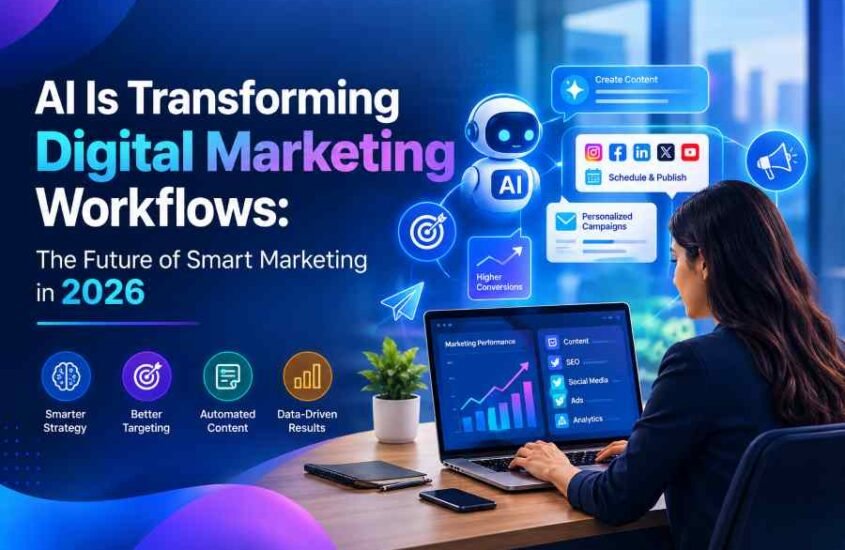
I see that Artificial Intelligence (AI) is changing the way businesses plan execute and improve their marketing strategies. Traditional marketing workflows often need a lot of time and manual effort for content creation, keyword research, social media management, advertising campaigns, customer engagement and performance analysis. With the progress of AI‑powered technologies businesses can now automate tasks, analyse customer behaviour more efficiently and create data‑driven marketing strategies. AI is no longer limited to generating content; AI is becoming a part of the whole digital marketing process.
I notice that in 2026 businesses are increasingly exploring AI‑powered marketing automation, predictive analytics, intelligent customer support and personalised advertising to improve efficiency and customer experiences. AI enables marketers to handle amounts of information spot emerging trends and make faster decisions. According to a Gartner survey published in May 2026 marketing leaders expect the share of marketing work automated by AI to rise from 16 % in 2026 to 36 % by 2028. This shows that AI is becoming an important part of marketing operations.
I think that for businesses looking to strengthen their presence adopting AI in digital marketing workflows can create chances to boost productivity, campaign performance and customer engagement. However successful implementation requires a mix of technology, reliable data, human creativity and a clear marketing strategy.
How AI Is Transforming Digital Marketing Workflows
I observe that AI is changing marketing workflows by helping businesses automate routine tasks and improve decision‑making across the marketing process. In the past marketers had to spend hours researching keywords preparing campaign reports segmenting audiences scheduling social media posts and evaluating advertising performance. AI‑powered tools can now support many of these activities letting marketing professionals focus more on planning, creative development and business growth.
I see that one of the important uses of AI is marketing automation. Businesses can use AI‑enabled systems to organise customer information, email sequences identify potential leads and recommend suitable marketing actions. For example when a visitor sends an enquiry through a website an automatic workflow can send a confirmation email classify the lead and alert the sales team. Depending on the data available and system settings AI can also help prioritise leads based on their engagement and likelihood of conversion.
I see that AI is also changing content marketing. Marketers can use AI tools to research topics, spot keywords create article outlines generate content ideas and prepare first drafts for blogs, advertisements and social media posts. These abilities can cut preparation time. Help marketing teams keep a steady publishing schedule. However businesses should review content carefully to ensure accuracy originality, brand consistency and real value for readers.
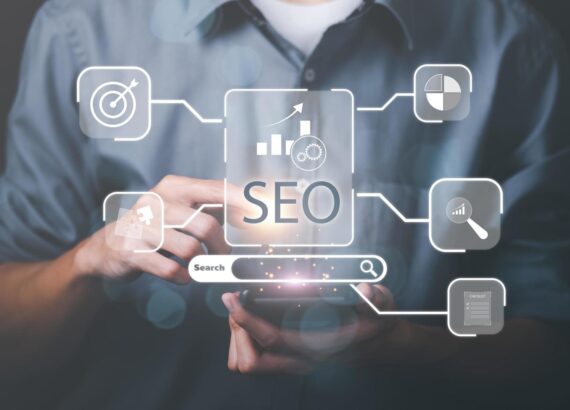
I notice that search engine optimisation is another area where AI improves marketing workflows. AI‑powered SEO tools can help with keyword clustering, search intent analysis, competitor research, content gap identification and website performance evaluation. These insights help marketers understand what their audiences are searching for and spot opportunities to boost visibility. Nevertheless effective SEO still needs content, a technically sound website, relevant expertise and a good user experience.
I see that AI is also supporting paid advertising campaigns by helping marketers analyse campaign data, spot audience patterns create advertising variations and evaluate performance. Of relying solely on manual analysis marketers can use AI‑supported insights to detect underperforming campaigns and explore improvement opportunities. Human supervision remains important because automated recommendations may not always match business goals, advertising budgets or brand positioning.
I notice that another major development is the rise of AI agents and connected marketing workflows. These systems can help coordinate activities, such as gathering information preparing campaign assets analysing results and suggesting next actions. Research published by McKinsey in April 2026 discusses how agentic AI can help marketers build connected workflows and speed up marketing execution.
I see that as these technologies keep evolving digital marketing is moving beyond isolated automation tools toward integrated systems that link research, content, advertising, customer engagement and performance measurement.
Key Benefits of AI in Digital Marketing Automation and Customer Engagement
I see that one of the benefits of AI, in digital marketing is better operational efficiency. Marketing teams often manage channels at once including search engines, websites, email campaigns, paid advertisements and social media platforms. AI‑powered automation can cut work and help teams coordinate these activities more effectively. As a result businesses can spend time creating creative campaigns understanding customer needs and improving marketing strategies.
I see that personalization is an advantage of using AI in marketing.
I find that AI can also help keep customers engaged with chatbots and smart assistants.
I think another key advantage is decision making based on data.
I believe predictive analytics can help marketing plans by spotting patterns that show customer behavior.
I notice that AI can also help marketing and sales work better.
I see that for businesses that compete these benefits can make marketing work more organized and use resources better.
The Future of AI in Digital Marketing: Strategies Businesses Should Follow
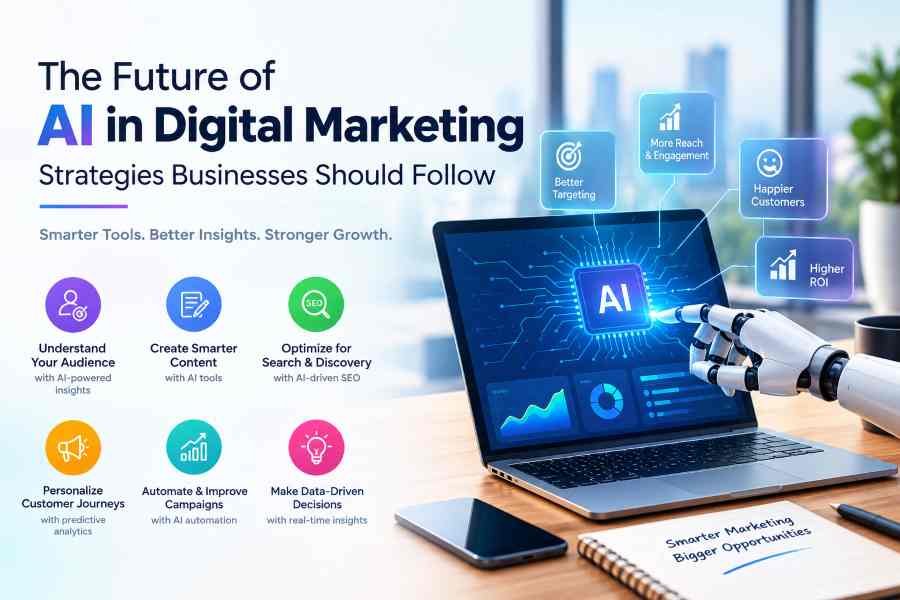
I think the future of AI, in marketing depends on how well businesses mix automation, customer insight, creativity and careful decisions.
I recommend the step is to find tasks that take a lot of time or cause problems.
I suggest the second step is to set up data habits.
I advise that third companies should keep people watching over all AI work.
I think businesses should also focus on content and how well it shows up in searches.
Another key priority is measuring performance. Before putting an AI tool in place businesses should set success signals, such as less production time better qualified leads, higher email engagement, stronger conversion rates or more efficient ad management. Regular performance reviews help find which workflows give value and which need improvement.
Working with a digital marketing and technology partner can also help businesses pick suitable tools merge their systems and create a practical implementation plan. Nextr Technology offers solutions that businesses can look at when they want to strengthen their online presence through website building, search engine ranking and other digital marketing services.
Ultimately the future of marketing will not be set by AI alone. Businesses that mix automation with original ideas, reliable data, customer understanding and human skill will be better placed to build meaningful relationships and achieve lasting growth.
Conclusion
AI is changing marketing workflows by improving automation, content planning, SEO research, audience segmentation, ad analysis and customer engagement. These abilities help businesses cut work understand customer behavior and make better marketing choices. As AI technology keeps evolving in 2026 its role in marketing systems and smart workflows is growing more important.
However successful AI adoption needs more than picking tools. Businesses must focus on data, data privacy, human oversight, useful content and measurable business results. By mixing AI‑powered marketing automation with a strategy and creativity companies can boost operational efficiency and build stronger digital marketing campaigns. For organizations that want to adapt to changing trends adding AI carefully can be an important step toward lasting online growth.
FAQs
How is AI transforming marketing workflows?
AI is changing marketing workflows by automating repetitive tasks helping with content creation examining campaign data improving audience segmentation and helping businesses personalize customer interactions. AI allows marketers to spend time on strategy, creativity and performance improvement.
What are the main benefits of AI in marketing?
The main benefits are productivity quicker data analysis, personalized customer experiences, automated campaign management, better lead qualification and more informed marketing choices. Results depend on the quality of the data the tools used and the implementation plan.
Can AI improve SEO and website traffic?
Yes AI can aid SEO by helping marketers find keywords examine search intent, spot content gaps and check website performance. However better rankings and traffic are not guaranteed. Businesses still need content, solid technical SEO, relevant expertise and a good user experience.
Will AI replace marketing professionals?
AI is more likely to change marketing roles than to remove the need, for professionals entirely. Although AI can automate some tasks businesses still need expertise for strategy, creative direction, customer understanding, fact‑checking, ethical decisions and brand management.
How can businesses start using AI in marketing?
Businesses can start by spotting repetitive marketing tasks picking suitable AI tools setting clear goals and testing one workflow at a time. They should watch results protect customer data, review AI‑generated outputs and grow implementation when measurable benefits become clear.
Thank you for reading
Buy Latest Tech Gadgets and Laptops: Click Here
Buy Web Hosting at an affordable price: Buy Now.
If you want to build your website at an affordable price, contact www.nextrtechnology.com
If you want to build your website at an affordable price, contact www.nextrtechnology.com
Read more blogs: https://www.nextrtechnology.com/blog/