Webflow and Google Gemini Integration: The Future of AI‑Powered Content Marketing in 2026
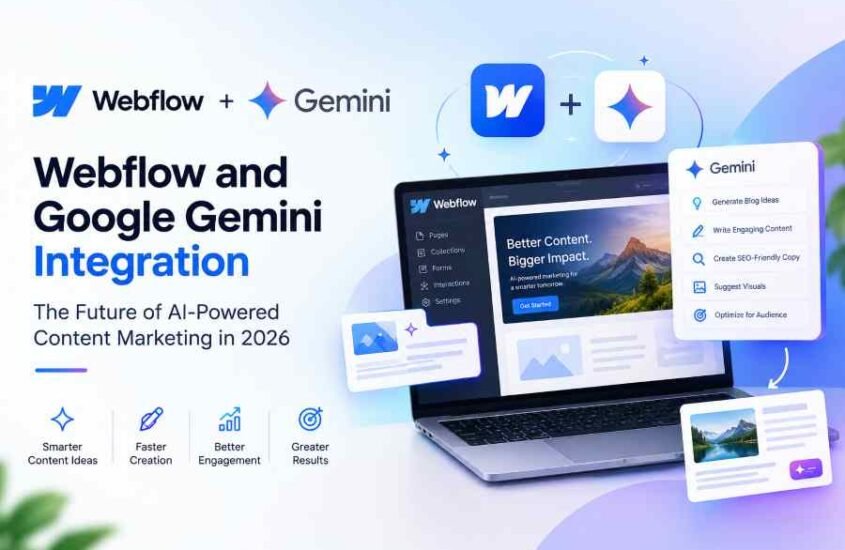
Artificial intelligence is changing how businesses create, manage, publish and improve content. In 2026 content marketing is no longer limited to writing blogs and posting on media. Businesses are using AI tools to learn about customer behaviour boost website performance, automate work and build stronger digital marketing plans. One of the developments in this area is the integration of Webflow with Google Gemini announced on October 15 2026. This integration brings AI help closer to website management, content optimisation and digital experience improvement.
The Webflow and Google Gemini integration lets users connect Gemini to Webflow through the Model Context Protocol server. This link allows marketing teams to work with website content, analyse performance manage CMS collections and spot chances to improve the site using AI workflows. Of switching between many tools users can access Webflow features while working with Gemini. The integration is a step for AI‑powered content marketing, website development and search optimisation.
For businesses digital marketing agencies and content creators this technology shows how artificial intelligence can support marketing operations. Still AI works best when combined with creativity correct information and a clear content strategy. Knowing what the integration can do helps businesses prepare for the future of marketing.
How Webflow and Google Gemini Integration Is Transforming Content Marketing
Content marketing requires businesses to handle tasks: research topics, plan content, publish on the web, optimise for search engines track results and update material. Traditionally marketers used platforms for each task, which made work more complex and time‑consuming. The Webflow and Google Gemini integration aims to simplify these workflows by linking AI help with Webflow’s website management tools.
Through this connection users can ask Gemini questions about website performance, review analytics manage CMS content and find areas that need improvement. For example a team can discover which pages bring traffic, spot content that needs updating and explore ways to increase user engagement. These insights help teams plan better and focus on what matters
Another important feature is content management. Businesses that publish blogs, service pages, landing pages and educational material often need a publishing process. With Webflow CMS AI workflows can help users create, update and organise content collections. This reduces administrative work and makes content operations more manageable. Marketers still need to review AI‑assisted material before publishing to ensure accuracy originality, brand consistency and usefulness.
The integration also supports building pages and reusable components from existing design systems. This is especially useful for businesses launching campaigns, services or dedicated landing pages. Teams can use AI to speed parts of the development process while keeping the established website style and brand guidelines.
For content marketing agencies this technology offers a chance to streamline website maintenance and campaign execution. Of treating content creation, website management and performance analysis as separate activities businesses can bring these tasks into a connected workflow. The result is an organised marketing process, as long as the team keeps proper review procedures and editorial oversight.
Benefits of AI‑Powered Content Marketing, for SEO and Website Performance
Search engine optimisation remains essential because businesses need their content to reach people who are actively searching for information, products and services. AI tools help SEO professionals analyse website data, spot content gaps organise keyword research and prioritise technical improvements. The Webflow and Google Gemini integration strengthens this approach by linking AI with Webflow’s data and analysis tools.
One benefit is website auditing. Search performance can suffer from links, accessibility problems, poor page structure, slow loading and low‑quality content. Webflow’s connected AI workflows support audits that cover SEO, accessibility, broken links, performance and content quality. These checks help teams identify issues that deserve attention.
Nevertheless recommendations should be. Important technical changes must be tested before implementation.
Another important change is the growing importance of Answer Engine Optimization also known as AEO. As people ask questions using AI search tools companies must make content that clearly answers relevant questions and shows expertise in the topic. Webflow’s new link gives users AEO analytics that show how AI systems find, describe and mention companies’ brands. This data helps marketers see how visible their brands are on AI search and find spots that need improvement.
Companies can use this information to write blog posts clarify service pages build detailed FAQs and make companies’ website structure stronger. For example a digital marketing firm could write a guide that explains how SEO services work answers common client questions and gives real examples that show its skill. Clear headings, descriptive page titles, useful internal links and correct facts can make such content easier for readers and search engines to understand.
Checking how a site performs also matters for content marketing. A page that gets lots of visitors may still get inquiries if the information is fuzzy or the call to action is weak. With Webflow Analyze and Optimize data linked teams can look at page performance review goals and see test results. These insights let marketers see which content and page versions work better.
Ai does not promise higher rankings, more traffic or better conversions. Success on search depends on things like how relevant the content is, how much competition there is, technical SEO, user experience, site authority and search engine rules. Companies should use AI to help make choices not to rely only on automatic suggestions. The best SEO plan mixes data original expertise, useful content and constant performance checks.
The Future of AI-Powered Content Marketing: Opportunities for Businesses in 2026
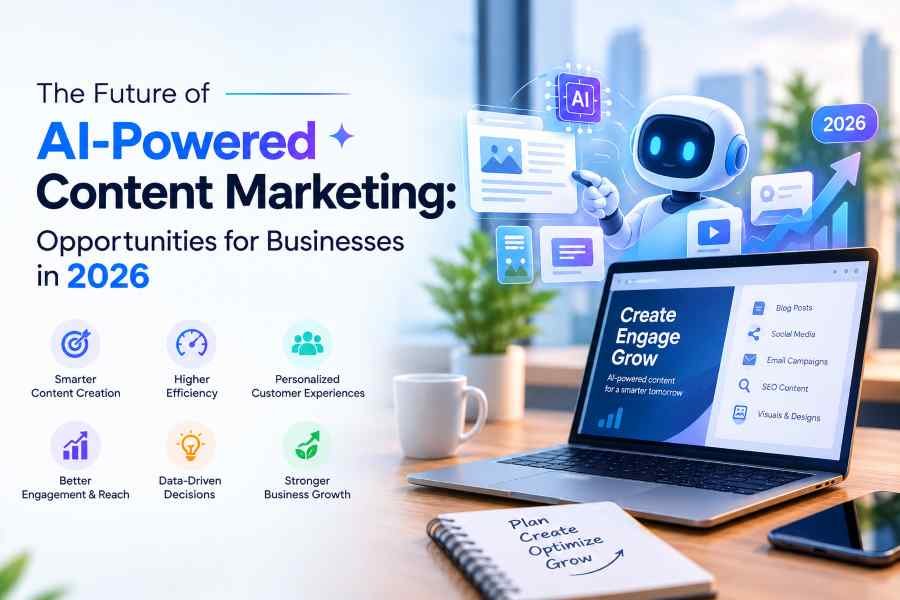
The next wave of content marketing goes toward linked data-backed and AI-supported work. The Webflow and Google Gemini link shows this trend by letting users join site management, content work and performance data inside a chat AI setting. For companies the chance is not just to create content but to build better digital experiences that meet customer needs and reach clear business goals.
A big chance is personalizing content. Companies can look at audience interests. How people use the site to know which topics matter most to each group. AI can help marketers find ideas change messages and arrange information for parts of the customer journey. Human check is still needed to keep personalization right respect privacy and match the brand voice.
Another chance is automating marketing workflows. Repeating tasks like sorting content lists drafting versions checking site data and spotting technical problems can take a lot of time. AI tools that connect can smooth these tasks letting marketers focus more on strategy storytelling, creative work and customer relationships. Companies should set approval steps so important site changes and published posts get proper human oversight.
Small and medium companies can also get help from easier site optimization flows. Firms, with marketing resources might struggle to handle content publishing, technical SEO, analytics and site improvements all at once. AI tools can help teams pick tasks and use their resources better. However real gains depend on the tools, plans, permissions, setup and skill each firm has.
Marketing agencies can use these advances to serve clients. For instance an agency might combine keyword studies, editorial planning, site optimization, analytics reviews and content updates into a process. AI can back research and execution while seasoned marketers give strategy and quality checks. This mix can let agencies meet client needs faster without losing work quality.
Companies must also brace for problems that come with AI use. Auto‑generated content can have facts, repeat wording, unsupported claims or details that do not show the brand’s expertise. Publishing lots of low‑value content can lose audience trust. Fail to meet search intent. Firms should focus on originality, accuracy, openness and real customer value of counting how much content they produce.
Businesses planning marketing strategy in 2026 should combine AI technology with strong editorial standards and clear measurable objectives.
Organizations should identify tasks choose appropriate tools, train teams and establish a consistent process for reviewing AI‑assisted work.
Organizations should also monitor website traffic, engagement, qualified leads, conversions and content performance to determine whether investment in marketing is delivering meaningful results.
As AI‑powered website tools continue to develop content marketing will increasingly involve collaboration between people, data and intelligent systems.
Businesses that use these technologies responsibly can improve efficiency while continuing to deliver useful, trustworthy and engaging digital experiences.
Conclusion
The Webflow and Google Gemini integration marks a development in AI‑powered content marketing in 2026. By connecting Gemini with supported capabilities the integration helps users work with website content review performance insights manage CMS collections and identify opportunities for SEO and website improvement. The integration also reflects the growing connection between content marketing, website development, analytics and AI‑driven search visibility.
Businesses and digital marketing agencies can use this development to simplify workflows improve website management and make informed content decisions. However successful digital marketing still requires ideas, accurate information, strategic planning and human oversight. AI should strengthen these practices rather than replace them.
Businesses that combine automation with valuable content and a customer‑focused approach will be better positioned to adapt to changing digital marketing requirements. For insights into digital marketing, SEO, website development and emerging technologies visit Nextr Technology at https://www.nextr.in/.
Frequently Asked Questions (FAQs)
1. What is the Webflow and Google Gemini integration?
The Webflow and Google Gemini integration connects Googles Gemini app with Webflow through its Model Context Protocol (MCP) server. The integration enables users to access supported capabilities for website content management, performance analysis, page creation and website optimization through AI workflows.
2. How can Google Gemini help with content marketing?
Google Gemini can assist with content planning, research, drafting organization and analysis. When connected to supported Webflow capabilities the integration can also help users manage CMS content, examine website performance and identify opportunities to improve digital content strategy. Human review remains important before publication.
3. Can the Webflow and Gemini integration improve SEO?
The integration can help marketers investigate SEO issues, review website performance and identify content improvement opportunities. However the integration does not guarantee search rankings. Results depend on content quality, technical SEO, relevance, competition, website authority and other ranking factors.
4. What is Answer Engine Optimization (AEO). Why does it matter?
Answer Engine Optimization is the practice of improving content so that it can be discovered, understood and potentially referenced by AI‑powered answer engines. Answer Engine Optimization involves providing answers, accurate information, useful structure and credible content. AEO analytics can help businesses investigate how AI systems discover and cite websites.
5. Should businesses replace human content writers with AI tools?
No. AI tools can assist with research, drafting, content organization and performance analysis. Human expertise remains essential for originality, fact‑checking, storytelling, strategic decisions and brand consistency. A combination of AI assistance and human editorial oversight is a reliable approach, to sustainable content marketing.
Thank you for reading
Buy Web Hosting at an affordable price: Buy Now.
If you want to build your website at an affordable price, contact www.nextr.in
Read this: How AI is Changing Education