Cloud Security Best Practices in 2026
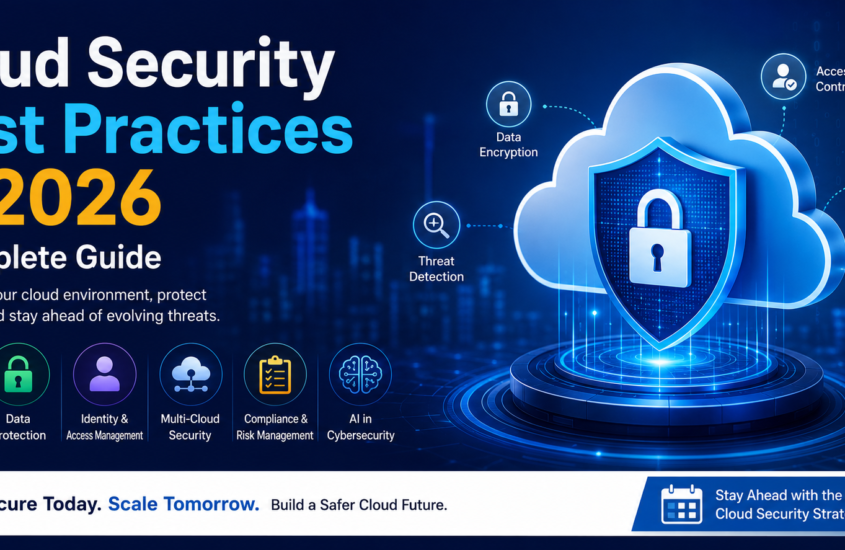
As companies continue moving their applications, databases, and workloads to the cloud, cloud security has become increasingly important. The cloud is great because it is flexible, can grow with your company, and saves you money. It also brings new security risks, such as ransomware attacks, identity theft, and data breaches.
In 2026, companies need to do more than the usual security methods. They need to be proactive and use cloud security strategies that include intelligence, automation and Zero Trust architecture. Whether you are a startup or a big company, using the right cloud security best practices can help protect your important information and keep your customers trusting you.
This guide will show you the effective cloud security best practices in 2026 and how companies can make their cloud environments safer.
Why Cloud Security Matters in 2026
Cloud services are now a part of how companies work online. Companies use cloud platforms to host their websites, manage customer data, run business applications and support people working from home.
As more companies use the cloud, bad people are trying to attack cloud environments more often. Some common threats include:
* Data breaches
* Account hijacking
* Misconfigured cloud storage
* API vulnerabilities
* Malware attacks
* Insider threats
* Ransomware
Having strong cloud security protects your data and makes sure your business keeps running smoothly and follows the rules.
Top Cloud Security Best Practices in 2026
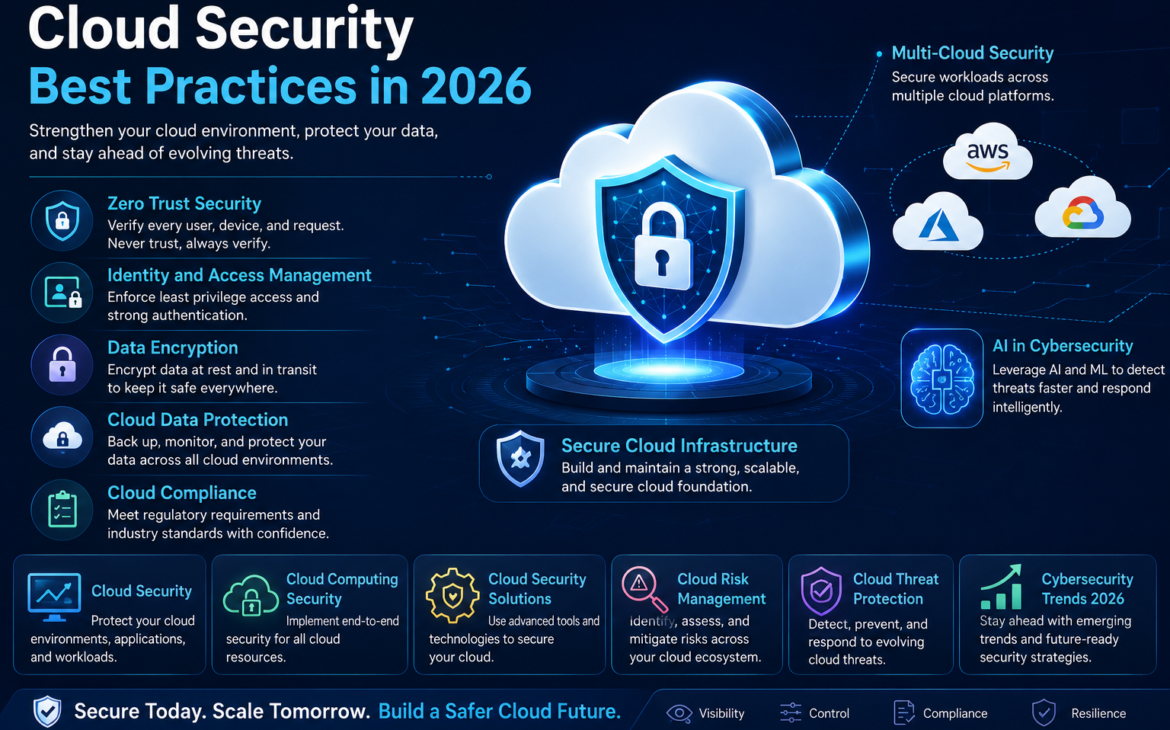
1. Adopt Zero Trust Security
Zero Trust is now the standard for cloud security. Of just trusting users or devices, Zero Trust checks every request before letting them in.
The main ideas of Zero Trust include:
* Verify every identity
* Limit what users can do
* Watch everything all the time
* Assume that breaches can happen
This way of doing things really reduces access to cloud security.
2. Implement Multi-Factor Authentication (MFA)
Passwords alone are not enough anymore. You should use Multi-Factor Authentication for all applications to add an extra layer of security to cloud security.
MFA uses:
* Passwords
* Mobile authentication apps
* Security keys
* Biometrics
Even if someone gets your credentials, they still cannot easily get into your accounts and affect security.
3. Encrypt Data Everywhere
Encryption is one of the ways to protect against cyberattacks and keep cloud security strong.
Companies should encrypt:
* Data that is not being used
* Data that is being sent
* Cloud backups
* Databases
* Storage services
Modern encryption makes sure that even if data is stolen, it will still be unreadable without the keys and keeps cloud security safe.
4. Strengthen Identity and Access Management (IAM)
Managing identities is critical for environments and cloud security.
You should follow the Principle of Least Privilege, which means giving employees access to what they need to do their jobs and keep cloud security strong.
Some best practices include:
* Controlling access based on roles
* Giving permissions
* Checking permissions regularly
* Automatically turning off accounts
Doing IAM minimises risks from inside the company and keeps cloud security strong.
5. Secure APIs
Cloud applications talk to each other through APIs, which makes them a target for hackers and affects security.
You can protect APIs by:
* Using API gateways
* Turning on authentication
* Limiting how many requests can be made
* Encrypting API traffic
* Watching API usage
Securing APIs is becoming a priority for cybersecurity in 2026 and cloud security.
6. Continuous Cloud Monitoring
Security should never be a one-time thing. Is important for cloud security.
Companies should always be watching:
* Login attempts
* Network traffic
* User behaviour
* System changes
* Configuration updates
Modern security systems can detect threats in time and keep cloud security strong.
7. Use AI-Powered Threat Detection
Artificial intelligence is changing security and making it stronger.
AI-powered platforms can:
* Detect behavior
* Find malware faster
* Predict attack patterns
* Automate responses to incidents
* Reduce false alerts
AI makes response times much faster than monitoring and keeps cloud security strong.
8. Regular Security Audits
Doing audits regularly helps find vulnerabilities before attackers can use them and keeps security safe.
Companies should regularly:
* Scan for vulnerabilities
* Test cloud infrastructure
* Review permissions
* Check compliance
* Update security policies
Doing audits regularly makes security better and keeps cloud security strong.
9. Backup Critical Data
Even secure systems can fail or get attacked by ransomware and affect cloud security.
You should follow the 3-2-1 backup rule:
* Three copies of data
* Two types of storage
* One backup that’s not on site or in the cloud
You should test your backup recovery procedures regularly and keep cloud security safe.
10. Keep Cloud Systems Updated
Software updates often have security patches and are important for cloud security.
You should always update:
* operating systems
* Applications
* Containers
* Virtual machines
* Third-party integrations
Automating patch management reduces the risk of known vulnerabilities. Keeps cloud security strong.
Compliance and Data Privacy
Cloud security also involves following laws and regulations. Is important for cloud security.
Companies should comply with standards like:
* GDPR
* ISO 27001
* SOC 2
* HIPAA
* PCI DSS
Following these standards builds customer trust. Reduces legal risks and keeps cloud security safe.
Emerging Cloud Security Trends in 2026
Some technologies are shaping the future of cloud security and cloud security trends:
* AI-powered Security Operations Centres
* Cloud-native application protection platforms
* Extended Detection and Response
* Passwordless authentication
* computing
* Secure Access Service Edge
* Quantum-resistant encryption
* Automated compliance monitoring
Companies that use these technologies will stay ahead of evolving cyber threats and keep cloud security strong.
Benefits of Strong Cloud Security
Using cloud security practices has several advantages and keeps cloud security safe:
* Protects sensitive business data
* Prevents cyberattacks
* Reduces downtime
* Builds customer confidence
* Supports compliance
* Enables secure work
* Improves business continuity
* Minimises financial losses
Cloud security is no longer an IT thing. It is a business necessity and keeps cloud security strong.
Conclusion
Cloud computing is driving innovation. It also brings new and sophisticated cyber threats. In 2026, companies must be proactive. Use a security strategy that includes Zero Trust architecture, AI-powered monitoring, strong identity management, encryption, continuous compliance and regular security assessments and keeps cloud security strong.
Companies that prioritise security protect their valuable data, build customer trust, reduce risks and ensure long-term success. By following these security best practices, companies can confidently move forward with digital transformation while staying safe from emerging cyber threats and keeping cloud security safe.
Frequently Asked Questions (FAQs)
1. What are security best practices?
Security best practices are ways and technologies used to protect cloud infrastructure, applications and data from cyber threats, unauthorised access and data breaches and keep cloud security strong.
2. Why is Zero Trust important in security?
Zero Trust makes sure that every user, device and application is checked before getting access, which reduces the risk of unauthorised access and insider threats and keeps cloud security safe.
3. How does AI improve security?
AI detects activities, finds threats in real time, automates responses to incidents and helps security teams respond faster to cyberattacks, keeping cloud security strong.
4. What is the biggest cloud security risk in 2026?
Misconfigured cloud resources, stolen credentials, ransomware, insecure APIs and identity-based attacks are some of the cloud security risks that affect cloud security.
5. How often should companies do cloud security audits?
Companies should do security audits at least every quarter, along with continuous monitoring and vulnerability assessments to find and fix risks quickly and keep cloud security strong.
Thank you for reading
Buy Web Hosting at an affordable price: Buy Now.
If you want to build your website at an affordable price, contact www.nextr.in
Read this: How AI is Changing Education