How to Start a Career in Web Development
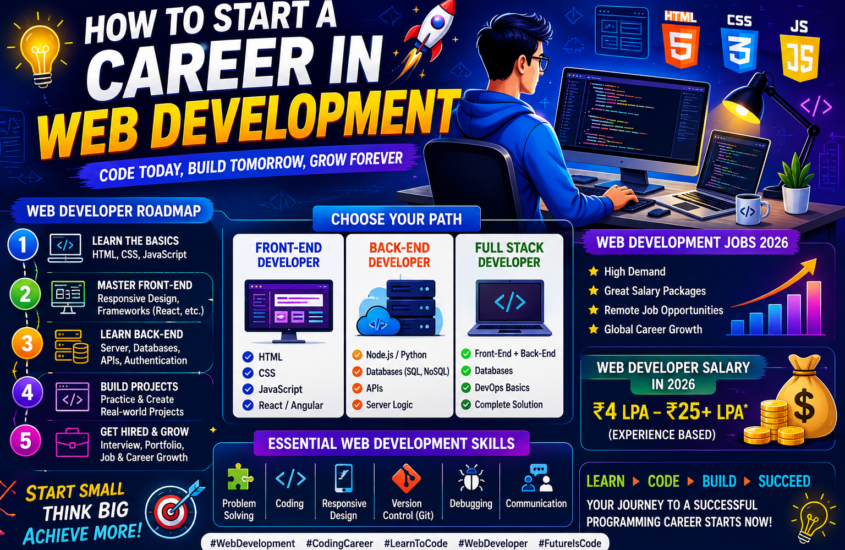
Web development is a career path in the technology industry. Many businesses are establishing their presence, so they need skilled web developers. You can work for a technology company, become a freelancer or build your digital products. Web development offers opportunities for career growth.
You don’t need a computer science degree to become a web developer. With a learning plan, practice and a strong portfolio, anyone can start a successful career in web development.
This guide will teach you everything you need to know about starting a career in web development. You will learn about skills, programming languages, career paths, certifications and tips for landing your first job.
What is Web Development?
Web development is creating, designing and maintaining websites and web applications. It involves writing code, managing databases, optimising performance and ensuring websites work smoothly across devices and browsers.
Web developers work on business websites to complex e-commerce platforms, social media applications and enterprise software.
Why Choose Web Development as a Career?
There are reasons why web development is a great career option:
* High demand across industries
* Competitive salaries
* Remote and freelance opportunities
* Continuous learning and innovation
* career paths
* Job security
* Opportunities to work globally
As digital transformation continues, businesses need skilled developers to build and maintain modern web applications.
Types of Web Developers
1. Front-End Developer
Front-end developers create the user interface and user experience of websites. They use:
* HTML
* CSS
* JavaScript
* React
* Angular
* Vue.js
They focus on design, accessibility and interactive web experiences.
2. Back-End Developer
Back-end developers build the server-side logic that powers websites. They use:
* Node.js
* Python
* PHP
* Java
* C#
* Ruby
They manage databases, APIs, authentication and server performance.
3. Full Stack Developer
Full-stack developers work on both end and back-end development. They understand:
* User interface design
* Server-side programming
* Database management
* Cloud deployment
* API development
Full-stack developers are in demand in today’s job market.
Essential Skills for Web Development
To build a career, you should master these fundamental skills.
Programming Languages
Start with:
* HTML5
* CSS3
* JavaScript
Then move to:
* TypeScript
* Python
* PHP
* Java
* SQL
Front-End Frameworks
Modern companies commonly use:
* React
* Angular
* Vue.js
* Bootstrap
* Tailwind CSS
Learning at least one front-end framework improves your employability.
Back-End Technologies
Popular back-end tools include:
* Node.js
* Express.js
* Django
* Laravel
* Spring Boot
* ASP.NET
Database Management
Understanding databases is essential. Learn:
* MySQL
* PostgreSQL
* MongoDB
* Firebase
Version Control
Git is a tool for developers. Learn:
* Git
* GitHub
* GitLab
These platforms help developers collaborate efficiently on projects.
Step-by-Step Roadmap to Become a Web Developer
Step 1: Learn HTML and CSS
These are the building blocks of every website. Practice by creating:
* Landing pages
* Business websites
* Portfolio websites
* Blog layouts
Step 2: Master JavaScript
JavaScript adds interactivity to websites. Learn topics like:
* Variables
* Functions
* Loops
* Objects
* DOM Manipulation
* ES6 Features
* APIs
Step 3: Learn Responsive Design
Modern websites must work on:
* Desktop
* Tablet
* Mobile
Understand:
* Flexbox
* CSS Grid
* Media Queries
Step 4: Choose a Front-End Framework
React is a framework. Build projects such as:
* Weather App
* Todo App
* Portfolio Website
* Dashboard
* E-commerce UI
Step 5: Learn Back-End Development
Understand how servers work. Topics include:
* REST APIs
* Authentication
* Databases
* CRUD Operations
* Server Deployment
Step 6: Build Real Projects
Employers value experience. Project ideas:
* Online Store
* Blog CMS
* School Management System
* Food Delivery Website
* Booking Application
* Chat Application
Projects demonstrate your coding skills and problem-solving abilities.
Step 7: Create an Online Portfolio
Your portfolio should include:
* About Me
* Skills
* Projects
* Resume
* Contact Information
* GitHub Profile
A professional portfolio increases your chances of getting hired.
Certifications That Can Help
Certifications strengthen your resume. Popular options include:
* Meta Front-End Developer Professional Certificate
* Google UX Design Certificate
* freeCodeCamp Responsive Web Design Certification
* Microsoft Web Development Certifications
* AWS Cloud Practitioner
Career Opportunities
Web developers can work in industries including:
* Software Companies
* Startups
* E-commerce Businesses
* Healthcare
* Education
* Banking
* Government Organizations
* Digital Marketing Agencies
* Freelancing Platforms
Many developers also launch their startups or become independent consultants.
Tips for Landing Your First Web Development Job
To improve your chances of getting hired:
* Build 8–10 real-world projects.
* Keep your GitHub profile
* Create a LinkedIn profile.
* Participate in coding challenges.
* Contribute to open-source projects.
* Practice interviews.
* Learn problem-solving using coding platforms.
* Stay updated with industry trends.
Employers often value skills and project experience more than formal education.
Future of Web Development
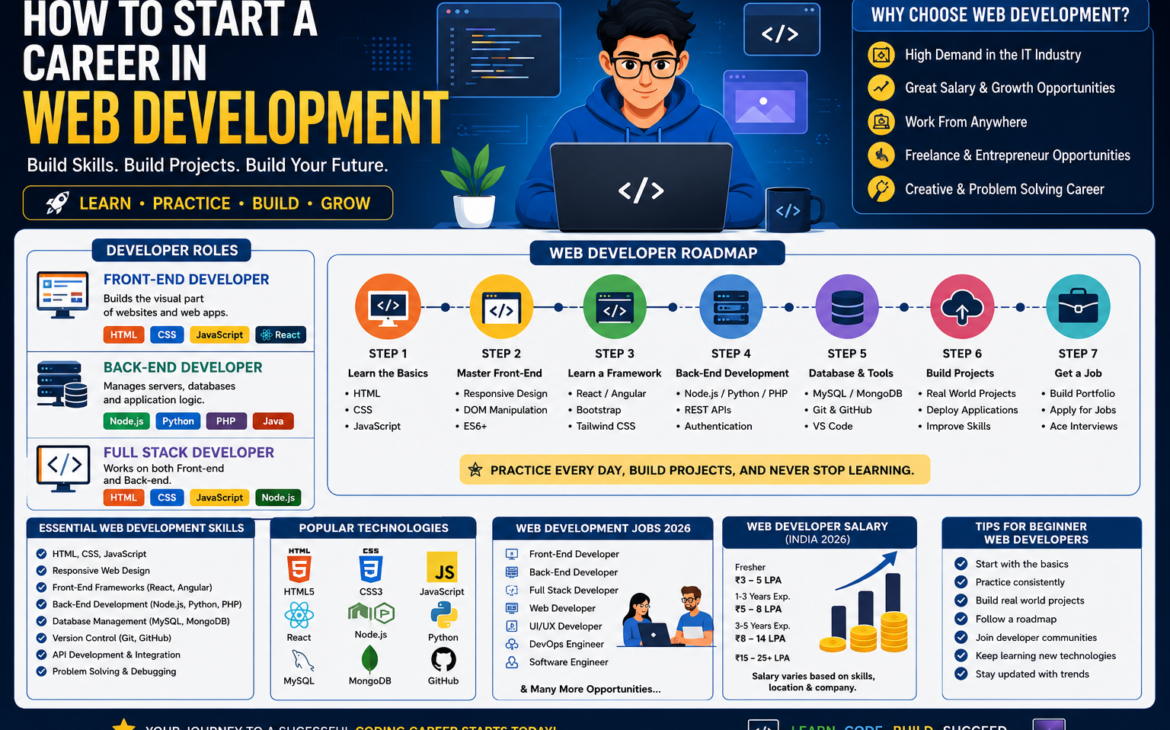
Web development continues to evolve with emerging technologies such as Artificial Intelligence (AI), Progressive Web Apps (PWAs), WebAssembly, serverless computing and cloud-native development. Developers who continuously upgrade their skills in frameworks, cybersecurity and cloud technologies will remain highly competitive.
In 2026 and beyond, demand for web developers is expected to remain strong as businesses invest in more secure and user-friendly digital experiences. Lifelong learning and adaptability will be key to long-term success.
Conclusion
Starting a career in web development is a decision for anyone interested in technology and digital innovation. With opportunities in end-to-end and full-stack development, this field offers excellent career growth, flexibility and earning potential.
The key to success is building a foundation in HTML, CSS, JavaScript and modern development frameworks while creating real-world projects that showcase your abilities. By learning, practising, and staying current with industry trends, you can build a successful and rewarding career as a web developer in 2026 and beyond.
Frequently Asked Questions (FAQs)
1. Can I become a web developer without a computer science degree?
Yes, many successful web developers are self-taught. Have completed online courses and certifications. Practical skills and a strong portfolio are often more important than a degree.
2. Which programming language should beginners learn first?
Start with HTML, CSS and JavaScript. These are the core technologies for web development before moving on to frameworks and back-end languages.
3. How long does it take to become a web developer?
With learning and practice, beginners can become job-ready in approximately 6 to 12 months, depending on their pace and dedication.
4. Is web development a career in 2026?
Yes web development continues to be in demand due to the ongoing growth of digital businesses, e-commerce and cloud-based applications.
5. What is the difference between an end and a full-stack developer?
A front-end developer focuses on the interactive aspects of a website, while a full stack developer works on both the user interface and the server-side logic, databases and APIs.
Thank you for reading
Buy Web Hosting at an affordable price: Buy Now.
If you want to build your website at an affordable price, contact www.nextr.in
Read this: How AI is Changing Education