What is Custom Software Development Services: Complete Guide
In our rapidly evolving digital landscape, off-the-shelf software often falls short of meeting the specific needs of growing businesses. Each company has its own unique workflows, customer journeys, and operational hurdles. That’s where custom software development really shines.
From tailoring software and integrating systems to enhancing features, scalability, and IT solutions that focus on business needs, today’s software services are crafted to help companies work smarter, faster, and more efficiently.
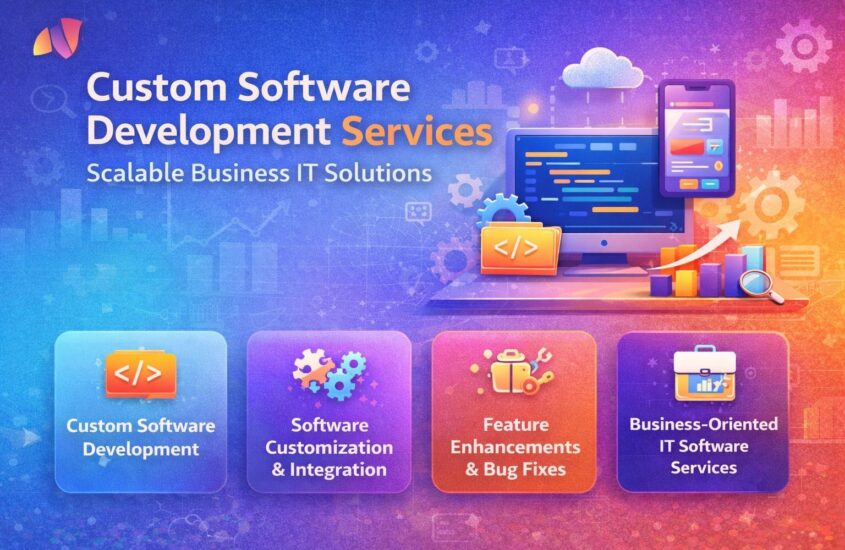
Let’s dive into how these five essential pillars of software development can revolutionise your business.
Custom Software Development
Custom software development is all about creating software that’s specifically designed for your business needs, rather than relying on one-size-fits-all solutions. Unlike off-the-shelf software, custom solutions are built from the ground up with your objectives, processes, and target audience in mind.
Why It Matters
Every business has its own way of operating. A retail store, a logistics company, and a healthcare provider all have unique requirements. Custom software guarantees:
Better alignment with your business processes, increased efficiency and automation
Enhanced user experience for both customers and staff. A competitive edge in the marketplace
Examples of Custom Software
CRM systems tailored to specific sales workflows; ERP solutions customised for internal operations; bespoke booking or management portals; industry-specific business applications
With custom development, businesses don’t have to bend their workflows to fit the software — the software adapts to the business.
Software Customisation & Integration
Many businesses are already utilising tools like accounting software, CRMs, HR systems, or inventory platforms. However, these systems often work in isolation. That’s where software customisation and integration come into play, ensuring that all systems collaborate seamlessly.
What Is Software Customisation?
Customisation is all about tweaking existing software to better fit your business needs. This can involve:
- Adding new modules
- Altering dashboards and reports
- Adjusting workflows
- Improving user interfaces. What Is Software Integration?
Integration is the process of connecting different software systems so they can share data and operate as a cohesive unit.
Benefits of Customisation & Integration
- Smooth data flow across departments
- Less manual work and fewer errors
- Quicker decision-making with centralised data
- Enhanced operational efficiency
For instance, by integrating your CRM with your billing system, you can automatically generate invoices when a deal is finalised. This not only saves time but also minimises mistakes.
Feature Enhancements & Bug Fixes
Software is never truly “one and done.” As your business expands and technology advances, your software needs regular updates. This is where feature enhancements and bug fixes become essential.
Feature Enhancements
Enhancements are about adding new features to boost performance, usability, or capabilities. These might include:
- New dashboards or reporting tools
- Automation features
- Mobile compatibility
- AI-driven insights or analytics
These enhancements keep your software fresh, relevant, and competitive. Bug Fixes
Bugs and technical glitches can hinder operations and frustrate users. Regular maintenance and bug fixes ensure:
- Smooth performance
- Enhanced security
- Less downtime
- Increased user trust
Ongoing improvement helps businesses stay ahead of the curve and ensures their digital tools support growth rather than hinder it.
Scalable and Future-Ready Solutions
In today’s fast-paced world, a small business can quickly evolve into a large enterprise. That’s why software must be designed with scalability and future readiness at its core.
What Is Scalable Software?
Scalable software is built to manage growing workloads, users, and data without any hiccups. It’s like having a flexible partner that expands as your business does.
Key Features of Scalable Software
- Cloud-based infrastructure
- Flexible architecture
- Modular development
- High performance even during peak usage. Future-Ready Technology
Future-ready software leverages cutting-edge technologies that can easily adapt to emerging trends like AI, automation, IoT, and advanced analytics.
Business Benefits
- No need to overhaul your software as your business expands
- Reduced long-term technology expenses
- Quicker integration of new technologies
- Enhanced competitive edge
By investing in scalable software, you’re not just planning for today; you’re setting the stage for the next 5 to 10 years.
Business-Oriented IT Software Services
Technology should always align with business objectives. Business-oriented IT software services are all about providing solutions that drive growth, efficiency, and profitability.
What Makes Software Business-Oriented?
Rather than merely focusing on technical specifications, business-oriented development takes into account:
- Return on investment (ROI)
- Reducing operational costs
- Automating processes
- Enhancing customer experience
- Accelerating decision-making
How It Helps Businesses
- Streamlines operations
- Boosts team productivity
- Elevates customer satisfaction
- Supports data-driven strategies
When IT solutions are in sync with business strategies, software transforms into a powerful asset for long-term success, rather than just a technical tool.

Frequently Asked Questions (FAQs)
- What’s the difference between custom software and off-the-shelf software?
Custom software is tailored specifically to meet your business needs, while off-the-shelf software is created for a wider audience. Custom solutions provide greater flexibility, scalability, and a better fit with your unique processes.
- How long does it take to develop custom software?
The timeline really depends on how complex the project is, including its features and integrations. Smaller projects might wrap up in a few weeks, but larger systems could take several months to complete.
- Can I upgrade my existing software instead of starting from scratch?
Absolutely! With the right customisation, integration, feature enhancements, and performance tweaks, you can often upgrade your current software to meet new business demands.
- Why is software integration so important?
Integration enables different systems to communicate and share data, which cuts down on manual work, boosts accuracy, and enhances overall efficiency.
- Is scalable software more costly?
While scalable solutions might need some careful planning upfront, they can actually save you money over time by preventing the need for frequent rebuilds and allowing your business to grow without major system overhauls.
- How do bug fixes and updates enhance business performance?
Regular updates keep your software running smoothly, securely, and efficiently, which helps minimise downtime and boosts user satisfaction.
Conclusion
In today’s fast-paced business landscape, companies require more than just basic software solutions; they need intelligent, scalable, and strategically-driven digital tools. Whether it’s
custom software development, seamless integration, feature upgrades, or business-centric IT services, every component is crucial for achieving digital success.
Tailored solutions empower businesses to optimise their operations, enhance customer experiences, and swiftly respond to evolving market trends. By investing in adaptable and future-proof software, organisations can maintain their competitive edge and ensure their technology evolves in tandem with their goals.
In an era where digital transformation is key to success, having the right software strategy isn’t just beneficial—it’s essential.
Thank you for reading
Buy Web Hosting at an affordable price: Buy Now.
If you want to build your website at an affordable price, contact www.nextr.in
Read this: How AI is Changing Education