Why Every Startup Needs SEO from Day One
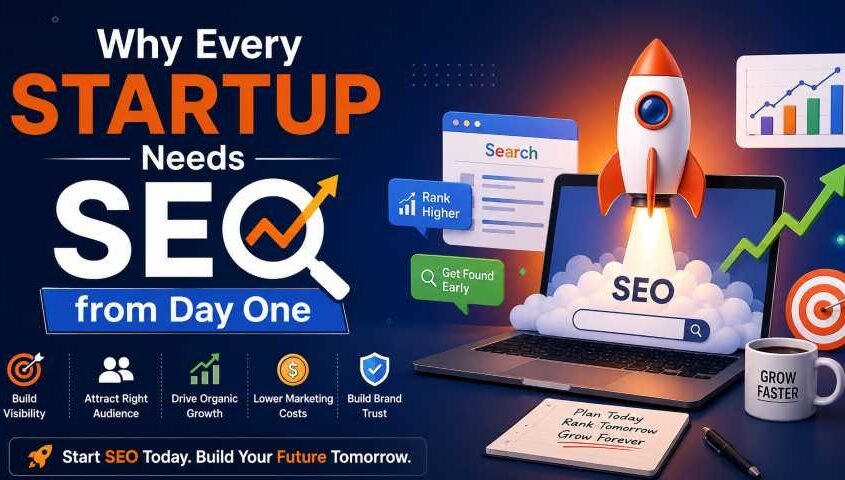
Starting a business is exciting, but getting people to discover a new startup can be one of the biggest challenges. A great product or service does not automatically guarantee customers, especially when a startup is competing with established brands that already have strong online visibility. This is where Search Engine Optimisation (SEO) becomes important. SEO helps startups build their online presence, attract relevant visitors, improve search engine visibility, and create long-term opportunities for growth. Instead of waiting until the business is established, startups should think about SEO from day one, as early optimisation can build a strong digital foundation that grows in value over time. Whether a startup operates locally, nationally, or globally, having a well-planned SEO strategy can help it compete for attention without depending entirely on expensive advertising.
Building a Strong Online Foundation from the Beginning
For a startup, the website is often the first major digital asset that represents the business online. SEO should therefore be considered while the website is being planned and developed rather than treated as something to fix later. Search-friendly website architecture, clear navigation, mobile responsiveness, fast loading speed, optimised page structures, meaningful URLs, proper internal linking, and relevant content can all contribute to a better foundation for organic visibility. When these elements are implemented early, startups can avoid many technical and structural problems that may become expensive and time-consuming to correct later. SEO also helps a startup understand what potential customers are actually searching for. Keyword research provides valuable insights into customer needs, questions, problems, and buying intent. Instead of creating website content based only on what the business wants to say, startups can create pages and resources around topics their target audience is actively searching for.
Starting SEO early also gives a startup more time to build authority. Search visibility generally does not happen overnight. Search engines need time to discover, understand, evaluate, and rank website content. A startup that begins publishing useful and optimised content early can gradually create a larger collection of relevant pages that target different customer searches. Blog articles, service pages, product descriptions, guides, FAQs, case studies, and educational resources can all contribute to a broader organic presence. As the website accumulates useful content and earns relevant backlinks and mentions, its ability to compete for valuable searches can improve. This is particularly important for startups because established competitors may already have years of content and authority. Starting SEO from day one allows a new business to begin closing that visibility gap instead of trying to catch up much later.
Another important advantage of early SEO is brand discovery. Customers often search online before making a purchase, contacting a company, or signing up for a service. If a startup does not appear when potential customers search for relevant products, services, or solutions, competitors may receive those opportunities instead. SEO allows startups to appear at different stages of the customer journey, from informational searches such as “how does a particular service work?” to commercial searches such as “best service provider for [need].” By creating content that addresses these different search intentions, a startup can introduce its brand to potential customers before they are ready to make a final purchasing decision.
Reducing Marketing Costs and Creating Sustainable Growth
One of the biggest reasons startups should invest in SEO early is that it can provide a sustainable source of website traffic. Paid advertising can generate immediate visibility, but traffic generally stops when the advertising budget is paused. SEO works differently. While it requires investment in strategy, content, technical improvements, and ongoing optimisation, successful organic pages can continue attracting visitors after they are published. This makes SEO particularly attractive for startups that need to manage limited marketing budgets carefully. Organic traffic can reduce the business’s dependence on paid campaigns and create another channel for acquiring potential customers.
SEO can also improve the quality of traffic coming to a startup’s website. Instead of reaching people randomly through broad advertising, search engines can connect businesses with users who are actively looking for specific information, products, or services. Someone searching for a solution related to a startup’s offering may already have a genuine need. By optimising content around relevant keywords and search intent, startups can attract visitors who are more likely to engage with the website, request information, make a purchase, or become leads. This does not mean every visitor will convert, but targeted organic traffic can create valuable opportunities when supported by a strong website and clear conversion strategy.
Early SEO also supports other areas of digital marketing. Content created for search engines can be repurposed for social media, email marketing, newsletters, videos, and other communication channels. Keyword research can provide ideas for advertising campaigns and content calendars, while SEO performance data can reveal which topics and services generate the most interest. In this way, SEO does not have to operate as an isolated marketing activity. It can become part of a startup’s broader digital strategy.
Another important benefit is competitive intelligence. By researching search results, keywords, competitors, content gaps, and customer questions, startups can understand how their industry behaves online. This information can help businesses identify opportunities that competitors have overlooked. For example, a startup may discover that competitors have strong rankings for broad keywords but very little useful content for specific customer questions. Creating high-quality resources around those gaps can help the startup establish visibility in valuable niche areas. Local startups can also benefit from local SEO by optimising their Google Business Profile, location pages, reviews, and locally relevant content to reach customers in specific geographic areas.
Turning SEO into a Long-Term Startup Growth Strategy
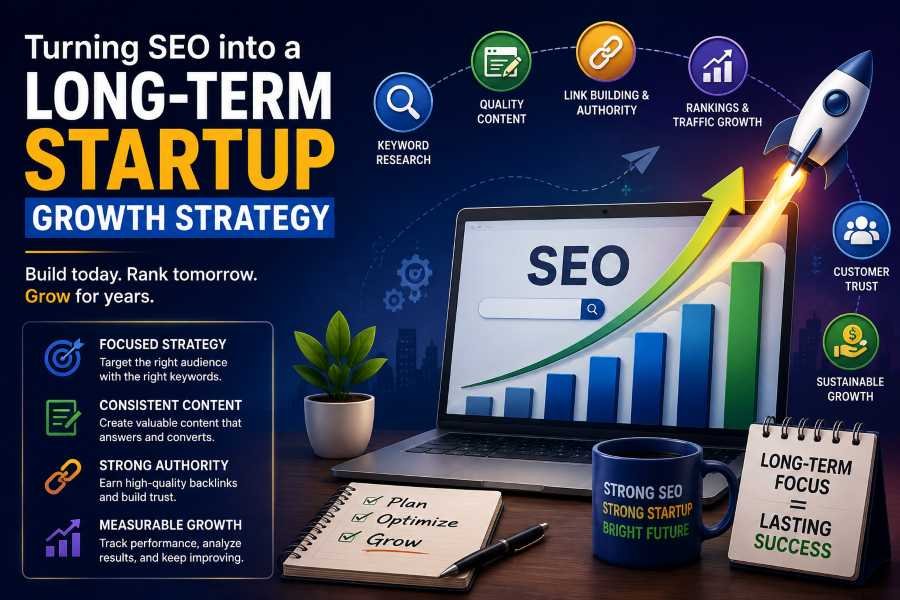
SEO should not be viewed as a one-time marketing campaign. Search trends, customer behaviour, competitors, algorithms, and business priorities can change over time, so startups need to monitor performance and continuously improve their strategy. The first stage should focus on building a technically sound website and identifying relevant keywords. The next stage can involve creating high-quality content, improving existing pages, earning authoritative backlinks, strengthening internal links, and optimising conversion opportunities. Over time, analytics and search performance data can help determine which strategies are generating meaningful results.
Startups should also focus on quality rather than producing large amounts of low-value content. Search engines increasingly prioritise useful, relevant, trustworthy information, and customers expect content that genuinely answers their questions. A startup can build credibility by demonstrating expertise, providing accurate information, addressing customer concerns, showcasing experience, and maintaining updated content. This approach can help create both search visibility and user trust.
SEO can also strengthen brand authority. When a startup consistently appears for relevant searches and provides useful information, customers may begin to recognise the brand as a credible source within its industry. This is especially valuable for new companies that do not yet have widespread brand recognition. A strong organic presence can make the startup look more established and accessible while helping potential customers discover the company through multiple search queries.
The most important point is that SEO requires patience. Startups should not expect every page to rank immediately or assume that a few months of optimization will guarantee top positions for highly competitive keywords. SEO is a long-term investment. However, starting early provides a significant advantage because every optimised page, quality backlink, useful piece of content, customer review, and technical improvement contributes to the foundation of future visibility. Businesses that wait until they desperately need traffic may find themselves competing from behind, whereas startups that begin SEO from day one can gradually build momentum.
Ultimately, SEO allows startups to build visibility without relying entirely on paid promotion. It helps businesses understand their audience, improve their websites, create useful content, attract targeted visitors, establish authority, and generate long-term organic opportunities. For a startup trying to grow in a competitive digital marketplace, SEO is not simply an optional marketing activity. It is an investment in discoverability, credibility, and sustainable growth.
Frequently Asked Questions
1. Why should startups invest in SEO from day one?
Startups should invest in SEO from day one because organic visibility takes time to develop. Starting early allows a business to build a search-friendly website, create valuable content, target relevant keywords, earn backlinks, and establish authority before competition becomes even stronger.
2. How long does SEO take to show results for a startup?
SEO results vary depending on competition, website quality, industry, keywords, content, backlinks, and the effectiveness of the strategy. Some improvements may become visible within a few months, while competitive keywords can take considerably longer. Consistent optimisation is essential for sustainable results.
3. Is SEO affordable for startups with small marketing budgets?
SEO can be suitable for startups with limited budgets because it can create long-term organic traffic rather than requiring payment for every visitor. Startups can begin with essential technical SEO, keyword research, optimised core pages, and useful content before expanding their strategy as the business grows.
4. Can SEO help a startup compete with established companies?
Yes. Although established companies may have greater domain authority and larger content libraries, startups can identify specific keywords, niche topics, local searches, and content gaps where competition may be more manageable. A focused SEO strategy can help startups gradually build visibility.
5. What should a startup do first for SEO?
A startup should begin with keyword research, technical website optimisation, mobile and speed improvements, search-friendly website structure, optimised core pages, useful content, internal linking, and appropriate tracking through analytics and search performance tools. These activities create a strong foundation for future SEO growth.
Conclusion
SEO from day one allows startups to build their online presence strategically instead of trying to gain visibility after competitors have already established themselves. It supports website discoverability, targeted traffic, brand credibility, content marketing, customer research, and long-term growth. Although SEO requires patience and consistent effort, the benefits can compound over time. For startups looking to create a sustainable digital presence, investing in SEO early can be one of the smartest foundations for future success.
Thank you for reading
Buy Web Hosting at an affordable price: Buy Now.
If you want to build your website at an affordable price, contact www.nextr.in
Read this: How AI is Changing Education