How to Do On-Page SEO & Off-Page SEO? Full Guide to Improve Ranking on Google
In the year 2026, getting high on Google means more than putting keywords on a website. Search engines are now looking at the quality of content, how relevant it is, the experience of the website, the authority it has, the trust it builds and the overall reputation of the company. This is why companies need an SEO plan that uses both On-Page SEO and Off-Page SEO together.
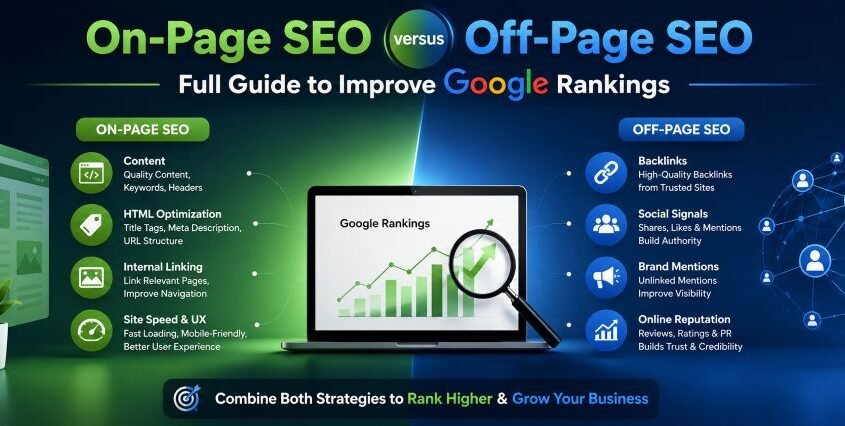
On-Page SEO is about improving parts of the website, while Off-Page SEO is about actions outside the website that help build trust and reputation. Both work together to make a website more visible in search results and attract visitors.
For companies wanting to improve their presence, Nextr Technology offers SEO and digital marketing services, including both On-Page SEO and Off-Page SEO.
What Is On-Page SEO and Why Is It Important?
On-Page SEO is about making each web page so that search engines can understand what it is about and users can find helpful information. It includes all the things you can change directly on your website.
Important parts of On-Page SEO include:
Title Tag: Make a related title that has the main keyword naturally.
Meta Description: Write a description that makes people want to click from search results.
Headings: Use an H1, H2 and H3 structure to organise the information.
Keyword Optimisation: Place keywords in the content in a natural way without overusing them.
URL Structure: Keep URLs clear and related to the page topic.
Content Quality: Make helpful, accurate and focused content for readers.
Internal Linking: Connect pages to help people and search engines find more content.
Image Optimisation: Use file names and good alt text for images.
Mobile-Friendly Design: Make sure pages work well on phones, tablets and computers.
Page Experience: Improve how easy the site is to use, how fast it loads, how easy it is to navigate, and how accessible it’s
Google keeps changing how it looks at search and stresses the importance of SEO methods that match what people are doing and what is useful.
For example, if a company wants to rank for ” marketing company in Delhi “, just repeating the same words over and over is not enough. The page needs to explain its services, give useful information, use proper headings, have good internal links and give a good experience to visitors.
Another important thing is understanding what users want. Before making or changing a page, know what the user is looking for. Someone who searches “what is on-page SEO” probably wants to learn about it, while someone who looks for “SEO agency in Delhi” might be looking for a service.
So, good On-Page SEO uses keywords. What people want, along with good content, structure, usability and relevance.
Nextrs SEO resources also talk about the importance of things like tags, where keywords are placed, headings, URLs and internal improvements as important parts of an SEO plan.
What Is Off-Page SEO. How Does It Help Build Website Authority?
Off-Page SEO includes things done outside the website to make it more trusted, famous and seen more by people.
While On-Page SEO helps search engines understand the website, Off-Page SEO helps show that it is valuable and trustworthy in the world.
Some main techniques for Off-Page SEO include:
Link Building
Backlinks are links from websites to your site. Good relevant backlinks can help your site become more trusted and easier to find.
The quality is more important than the number. A few good links from trusted sites can be better than a lot of low-quality ones.
Good ways to build links can include:
Writing for websites
Getting digital PR
Listing in industry directories
Reaching out to websites with useful content
Creating guides that others want to link to
Doing original research and sharing stats
Making infographics
Working with partners and getting mentioned
Finding broken links to fix
Making real useful things can naturally make other sites want to link to you. Nextrs’ advice on link building says that the best content includes guides, research, infographics and interactive resources.
Brand Mentions
Your brand’s presence online can help build trust and awareness. Mentions on industry sites, news, business sites and online groups can help your brand be known.
Local SEO
For businesses that serve specific areas, making sure the business details are correct and building visibility in that area can help with local search results. Reviews, mentions, citations, and a good business profile are all part of a local SEO plan.
Social Media Promotion
Social signals are not a way to rank higher. Social media can help share content, build brand awareness, get more interaction and increase the chance of getting traffic and mentions.
Digital PR
Digital PR can help businesses get attention through online magazines, industry sites, interviews, expert opinions and news. These can help increase brand recognition and bring in traffic and links.
The main idea is to build trust instead of trying to trick search engines. Buying low-quality links, joining spammy link programs, or using irrelevant sites can cause more problems than help.
On-Page SEO versus Off-Page SEO: Which One Should You Pick?
The answer is simple: you need both.
On-Page SEO and Off-Page SEO have goals, but they work together.
On-Page SEO Off-Page SEO
Improves your site Builds trust from
Focuses on content and page details. Focuses on reputation and outside signals
Includes titles and headings Includes backlinks and brand mentions
Uses internal links; uses outside link building
Improves how relevant the site is. Helps build trust.
You control it directly. It depends on websites.
Think about posting a great article about “SEO Services for Small Businesses.” Strong On-Page SEO can make the article well-organised, relevant and easy to read.
If the website is not trusted and has no outside support, it might still be hard to compete with bigger websites.
Now think about the article getting mentions from top industry sites, getting good backlinks, getting traffic, and being seen as useful. The mix of content and outside trust makes a much stronger SEO plan.
How to Make an SEO Plan in 2026
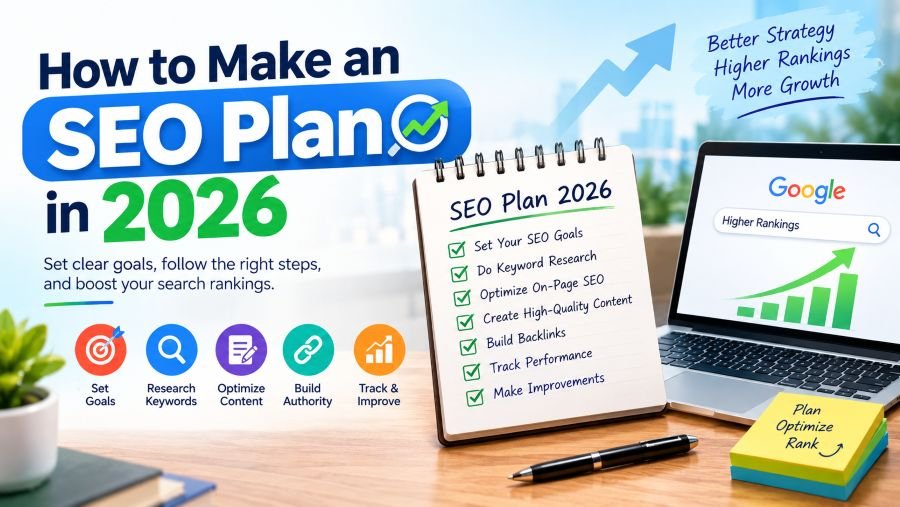
A modern SEO plan should start with a strong website.
Step 1: Do keyword research
Find the keywords based on what people want, how hard it is to rank, how relevant it is, and what the company wants.
Step 2: Improve important pages
Make titles, descriptions, headings, URLs, content, images, internal links and other page details better.
Step 3: Make content
Write long articles, guides, FAQs, case studies and service pages that really answer people’s questions.
Step 4: Make better internal links
Link related pages so visitors and search engines can move around the site easily.
Step 5: Get good backlinks
Focus on relevant websites instead of trying to get many links quickly.
Step 6: Build brand trust
Use PR, partnerships, expert content, social sharing and being part of the industry to increase brand visibility.
Step 7: Check results
Track how much traffic you get, how many keywords you show up for, how many backlinks you have, how people interact and how many sales happen.
SEO is also changing beyond regular search results. Things like AI-powered search, Answer Engine Optimisation, and Generative Engine Optimisation are becoming more important in 2026.
This means companies should focus on making content that’s clear, trusted, well-structured and helpful instead of just putting in keywords.
Frequently Asked Questions
1. What is the difference between On-Page SEO and Off-Page SEO?
On-Page SEO improves parts of the website like content, titles, headings, URLs, images and internal links. Off-Page SEO is about actions like getting links, digital PR, brand mentions and building reputation.
2. Which is more important: On-Page SEO or Off-Page SEO?
Neither should be seen as important alone. Strong On-Page SEO makes the site useful and relevant, while Off-Page SEO helps build trust and recognition. Combining both usually makes up an SEO plan.
3. How long does it take for SEO to work?
SEO does not have a set time. Results can depend on competition, how old the website is, how good the content is, how the site is set up, the industry, backlinks and how much people are searching. Consistent work and checking are needed.
4. Are backlinks still important for SEO in 2026?
Good and trustworthy backlinks can still help with trust. Finding a site. Businesses should focus on getting real good links instead of just getting many.
5. Can a website rank with On-Page SEO?
Yes, for less competitive searches, but competitive keywords usually need more trust. Combining On-Page SEO with real Off-Page SEO can help a site do better.
Conclusion
On-Page SEO versus Off-Page SEO is not a choice between two plans. Both are parts of a full SEO plan. On-Page SEO makes sure the website is useful, well-organised, and easy for search engines and users to understand. Off-Page SEO helps build trust, reputation, brand visibility and recognition.
In 2026, companies should move past just putting in keywords. Focus on helpful content, good quality, what people are looking for, real trust, good backlinks and a good user experience. A good mix can help websites get long-term visibility without relying on fixes.
For companies looking for help with SEO, website building and digital marketing, Nextr Technology offers SEO services that focus on being seen and growing the business.
Thank you for reading
Buy Web Hosting at an affordable price: Buy Now.
If you want to build your website at an affordable price, contact www.nextr.in
Read this: How AI is Changing Education